




The Booking of your participation in any journey takes place in three stages:
First step: Filling the application form for participation in the tour. Be sure to include your full name, We work officially and all accounts are registered. Please write your contact so that we have the communication wit you. After your application come to our website - the site administrator will send you a bill at your name for a advance of the tour. Maximum response time: 6 hours. Usually responsible for 1 hour.
Second stage: The reservation to participate in any tour takes place when you make the advance payment of 30% of the tour price to the account of an Indian travel company INCREDIBLE HIMALAYA. The advance is transferred via bank payment systems in any bank, account details will be sent by the administrator to e-mail of participants after getting the application form for participation.
ATTENTION Booking the tour takes place only when the advance payment transferred. If, after receiving of the invoice for advance payment, you do not make a payment within three working days, your application form for participation is automatically canceled by site. If you still want to participate in the tour, you have to apply the form again. When we receive an advance on our bank account we sent payment receipts confirming your participation, as well as a contract for the provision of travel services on this tour. The administrator sends you the electronic copies of receipts and contracts with digital signature and seal by e-mail and if necessary - to the postal address - the original documents. The remaining amount is payable as ayou arrive at the beginning of the trip, in India.
The third stage: Preparing for the journey. We also have a verbal communication on Skype with members of our travels. 2 weeks before the tour we gather the whole group in Skype and discuss preparations for the journey. Also welcome verbal individual consultations on Skype, it helps us to answer all your questions maximized. Because the most of the year we are in India, the main communication with us is Skype.
Attention! You don't need to register on our site to join the tour. If you are unable to fill the application form, please just send your application in letter (free form) - by mail: contact@phototour.pro
Attention! If you have not received a response to your letter within 6 hours (maximum response time for a request), please look at the spam folder. Perhaps, our letter got there by mistake. We always reply to requests in a maximally short period of time.
Photo tour of the origins of Tibet: Bon, the true Aryans Da Hanu, the mystery of the Tsam Dance in Lamayuru.
Day 1, June 28: Delhi – Leh (flight). Acclimatization at altitude. Strolling through the Old City.
Day 2, June 29: Leh. Shey Gonpa Monastery, White Stupas of Naropa.
Day 3, June 30: Alchi Gonpa. Lunar Land. Lamayuru.
Day 4, July 1: Lamayuru Gonpa Monastery. Yuru Kabgyat Buddhist Mystery, Day 1. Tsam Dance.
Day 5, July 2: Lamayuru Gonpa Monastery. Yuru Kabgyat Buddhist Mystery, Day 2. Tsam Dance.
Day 6, July 3: Da Khanu Gorge. Donkar Aryan Village, Picnic with Women.
Day 7, July 4: Aryan village of Skrubuchan, rock gonpas.
Day 8, July 5: Ancient Aryan village of Hanu Yekma. Return to Leh.
Day 9, July 6: Free day in Leh. Old town, bazaars.
Day 10, July 7: Morning puja at Thiksey Gonpa Monastery.
Day 11, July 8: Leh - Delhi (flight). Tour of Delhi (optional), evening transfer to the airport, and return home.
To reserve a place on this Tibet tour, you must make a deposit of $200 USD to the account of the Indian travel company INCREDIBLE HIMALAYA PRIVATE LIMITED.
The security deposit is transferred by the tour participant using any bank payment system. The account details will be sent by the administrator to the participant's email address after receiving the tour application.
Upon payment of the deposit, the participant will be sent a receipt and a travel service agreement confirming the payment and reservation of their participation in the tour.
The remaining balance is paid upon arrival at the tour's starting point, in this case, in Leh, Ladakh.
1. Airport transfers to and from the hotel in Leh.
2. All transfers throughout the Tibet photo tour in comfortable vehicles.
3. Accommodation in double rooms at a hotel in Leh and in guesthouses in Lamayuru, Donkar village, and Tangse village.
Single room accommodation is available for $240 for the entire photo tour.
4. Information support from the Ladakh photo tour organizers from start to finish.
5. Excursion guidance along the photo tour route by local guides.
6. Photographer guide and thematic consultations on travel photography, genre photography, and photography in the highlands of Ladakh.
7. Participation in the Yuru Kabgyat (Cham Dana) Buddhist mystery at Lamayuru Gonpa Monastery.
8. Participation in a women's picnic in Donkar village.
9. Lecture on the integration of Tibetan Buddhism into culture.
10. Lecture on photography: "Characteristics of ethnographic photography in the Ladakh Valley."
11. All taxes and fees as per the photo tour itinerary.
1. Roundtrip airfare to Delhi Airport from your country of residence.
2. Airfare Delhi - Leh - Delhi. Estimated cost of airfare is $80-$120.
3. Free 30-day single-entry tourist e-visas, applied for online 7 days before arrival in India.
Information on applying for a tourist visa to India.
4. Entrance fees to monasteries: approximately $10 for the entire trip.
5. Permits for the closed border areas of the Da Khan Valley and Pangong Lake: $10-$20 per permit.
6. Meals during the photo tour: approximately $120 for the entire trip.
7. Medical insurance: purchased individually by each participant.
8. Tips for drivers and English-speaking guides: $1 per day.
9. Anything that is not listed as “Included in the photo tour price.”
ATTENTION!
This Ladakh tour has no special physical or health requirements.
There is also no need to worry about altitude acclimatization:
we are experienced in acclimatization, and almost all of our tourists easily tolerate the climate and altitude of Ladakh.
REGISTER FOR PARTICIPATION IN THE TRIP IS OPEN UNTIL JUNE 15, 2027.
The tour is based in hotels of a very comfortable standard for the Ladakh valleys, Lamayuru, and Da Khanu.
Particular attention has been paid to natural vehicles:
we will travel as comfortably as possible in the highlands of Ladakh.
Accommodations:
- In Leh - a cozy, warm hotel with hot water, shower and toilet in the room, and Wi-Fi.
- In Lamayuru, there's a guesthouse at the Lamayuru Gonpa Monastery. The room's window overlooks the square where the Buddhist ritual will begin.
Clean and cozy, with restrooms and showers on every floor. Excellent restaurant.
- In the village of Donkar, there's a new hotel, very clean and cozy, with showers and toilets in every room, and 24-hour hot water and electricity.
For questions about organizing and participating in the Ladakh tour, please contact us:
Contact phone numbers:
@Project_PhotoTour - Telegram channel of Project PhotoTour, Ilona Kryzhanovskaya, head of INCREDIBLE HIMALAYA and Project PhotoTour.
+ 91 94 1909 7049 (India) - Phone and WhatsApp - Ilona Kryzhanovskaya, head of INCREDIBLE HIMALAYA and Project PhotoTour.
+7 9037204771 (Russia) — Maxim Savchenko, Technical Director of the PhotoTour Project.
Email:
il@phototour.pro - Ilona Kryzhanovskaya, Director of the PhotoTour Project
max@phototour.pro - Maxim Savchenko, PhotoTour Project
Organizing Team:
Ilona Kryzhanovskaya: photographer, ethnographer, ethnographic photography, genre photography, subcultural practices, and myth-building in photographs.
Sonam Rinchen - partner and co-founder of the PhotoTour Project.
Lobzang Tsewan: head of the English-speaking guide team of the PhotoTour Project.
Nina Lozenko: Director and Administrator of the PhotoTour Project.
Our local Ladakhi English-speaking guides, who are representatives of the culture, are the PhotoTour Project team.
A team of driver-guides will accompany you throughout the photo tour.
For participants of the Origins of Tibet trip, we recommend mandatory reading.
Here you'll find answers to all your questions about the tour conditions and preparation:
Recommendations and rules for photo passengers and accompanying persons in Ladakh, Zanskar, and the Spiti Valley (Little Tibet).
This trip to Tibet cannot be categorized into any specific format, such as a tour or a photo tour.
In essence, it will be both: a tour and a photo tour, but the main thing is a journey through impossible modes of existence, through realities that are many years old in a space where Time does not exist.
It sounds unusual, until you find yourself here, in all of this.
Incidentally, based on our own experience in past years (2011-2023), we have repeatedly observed Buddhist practitioners grabbing cameras and taking pictures—well, photographers are much more active, and photographers, putting their cameras down, look and look, and for some reason, I sometimes think they are meditating.
The most powerful, ambiguous, and multifaceted Tsam dance in Ladakh is the Yura Kabgyat in Lamayuru.
54 masks, the longest in duration, incredible.
Unthinkable.
So:
This June trip to Ladakh offers the opportunity to explore the ancient monasteries, primitive cultures, and sacred rituals of the Bon people of Ladakh, Little Tibet.
In this sense, the tour fully lives up to its name: we truly come into contact with the origins of Tibetan Buddhist culture, the origins of Tibet.
And now - in more detail:
The emphasis of this journey for photographers:
almost round-the-clock photography of all possible types and formats in incredible places - from landscape photography to shooting ritual acts at a Buddhist mystery with the performance of Tsam Dance (Mask Lam Dance).
The photo tour is primarily aimed at photographers of any level: from pros to amateurs.
For professional photographers, this trip is an opportunity to bring bright and unusual materials for a personal exhibition from Ladakh.
For amateur photographers, this is an opportunity to improve their professional level in the conditions of rich photography of the travel program, to shoot their first exhibition shots.
Active tourists and travelers from any country of the CIS and the world can also take part in the photo tour, for whom this trip can be the first step into the amazing world of photography.
And for all participants of the tour, this is an unconditional opportunity to visit very interesting and beautiful places, meet with real ancient cultures, get vivid emotional impressions, relax and recover at new levels in the high energies of Little Tibet.
This is a very creative journey in every way.
The emphasis of this journey for non-photographers:
If, nevertheless, you stand up and do not take pictures, you are infinitely lucky:
most likely you will be able to plunge headlong into the ancient living culture of Tibetan Buddhism, come in contact with powerful energy rituals and carriers of this culture no less powerful in their benevolence.
And soak up the incredible power of these places.
However, photographers are not immune to this either.
Highlights of the Origins of Tibet trip:
1. The Yuru Kabgyat Buddhist mystery at Lamayuru Monastery, accompanied by lamas performing the highest initiations of the Tsam Dance (Mask Dance), a sacred ritual and a vibrant, unforgettable spectacle.
2. Introduction to the Bon religion: today, the Tibetan Bon religion is the oldest religious tradition on planet Earth. We will visit Bon monasteries and villages of ethnic peoples who still practice Bon culture. 3.
Dha Khanu - villages of true Aryans. In western Ladakh, near the border with Pakistan, live a people known as the Drokpa or Darda, which means "nomad" in Ladakhi and Tibetan. Unlike the Ladakhis, who are of Tibeto-Mongolian origin, the Dardas are descendants of the Aryans. They descend from pre-Indo-Aryan tribes and have maintained their racial purity for centuries, not mixing with other nationalities, limiting marriages within their community, and strictly prohibiting contact with outsiders. It was to these villages that Hitler organized expeditions "for Aryan blood." Located near the border, this area is virtually closed to foreign tourists. A special permit is required to enter.
4. Visit the ancient Aryan village of Hannu-Yokma: stone houses, a school, and a village temple.
5. The most beautiful non-touristy mountainous regions of Ladakh, Lamayuru and Da-Hanna: otherworldly places and landscapes.
And most importantly:
The time on such trips through Ladakh is greatly extended:
a day (no joke) feels like three), so many unusual events, incredibly beautiful places, and powerful emotional impressions. Therefore, this is also a wonderful opportunity to “fall out” of your culture for a while, reboot and return with new strength, emotions, ideas and desires.
Most of the photos featured in the description of the journey to the origins of Tibet are clickable to enlarge; simply click on the photo and it will open in a new window.
All photos were taken during our tours of Ladakh and Lamayur between 2012-2026; they represent real places you will visit and see with your own eyes.
The total mileage for each day is indicated in the description.
Day 1, June 28: Delhi – Leh (flight). Acclimatization at altitude. Stroll through the Old City, 3,600 m.
Arrival at New Delhi International Airport (India) from your home country.
We obtain an e-visa, collect our luggage, and proceed to one of the domestic terminals:
D3 is in the same building,
D2 is a little further; turn left from the international terminal and walk 100 meters through a tunnel.
This is a common practice on our Ladakh tours:
flights arriving at New Delhi Airport typically arrive at Terminal D3 between 2 and 5 AM, proceed directly to the departure terminal, and depart for Leh on one of the morning flights.
We book our Delhi-Leh flights so that there is a 3-4 hour buffer between the domestic and domestic flights.
Flight to Leh, 1 hour 20 minutes.
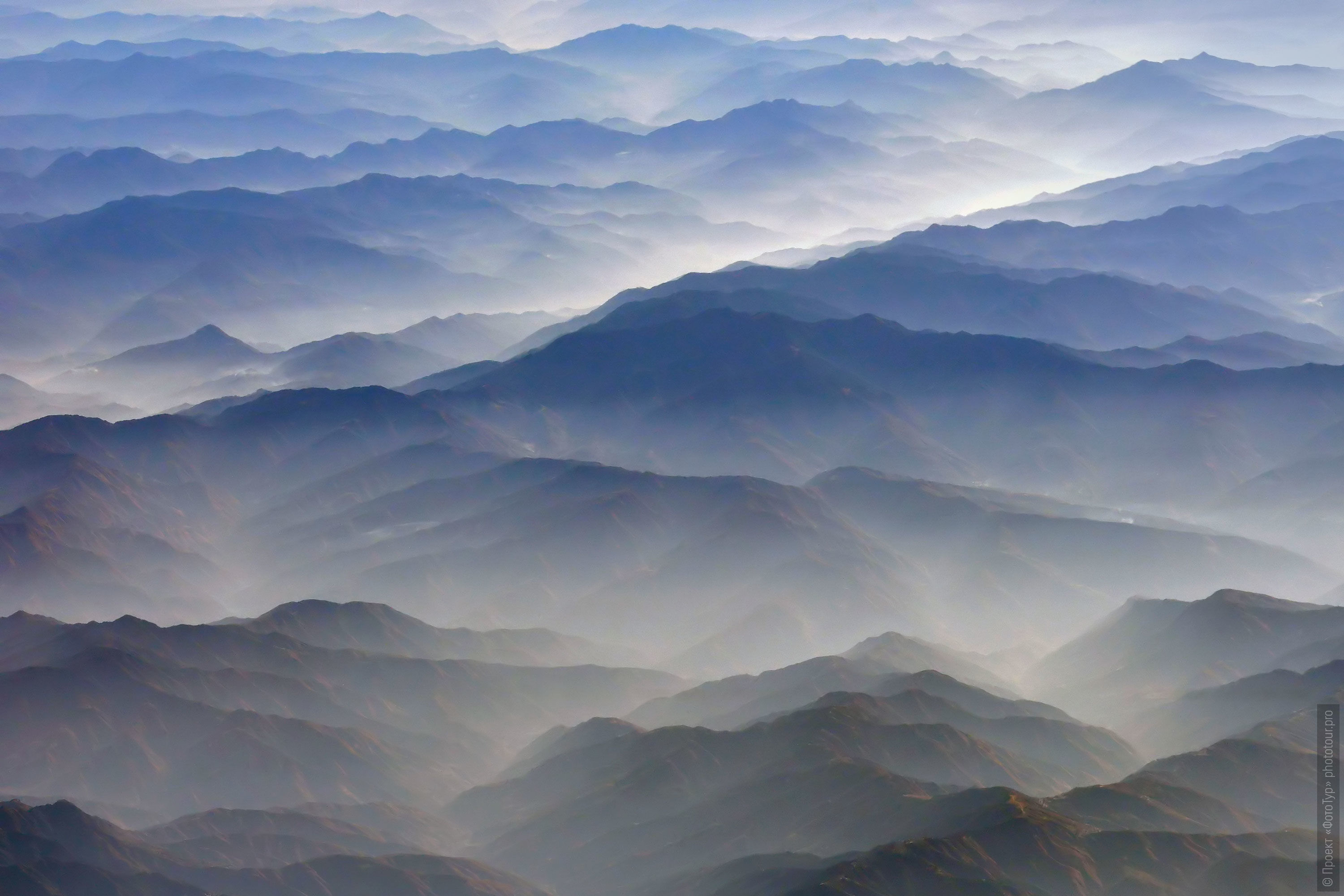
This 90-minute flight from Delhi to Leh is a breathtaking sight, as the plane flies over the most beautiful peaks of the Himalayas.
We recommend reserving seats on the left side of the plane in advance – this side is the most photographed when landing in Leh. The best seats are 27th to 30th, so you won't be obstructed by the plane's wing.
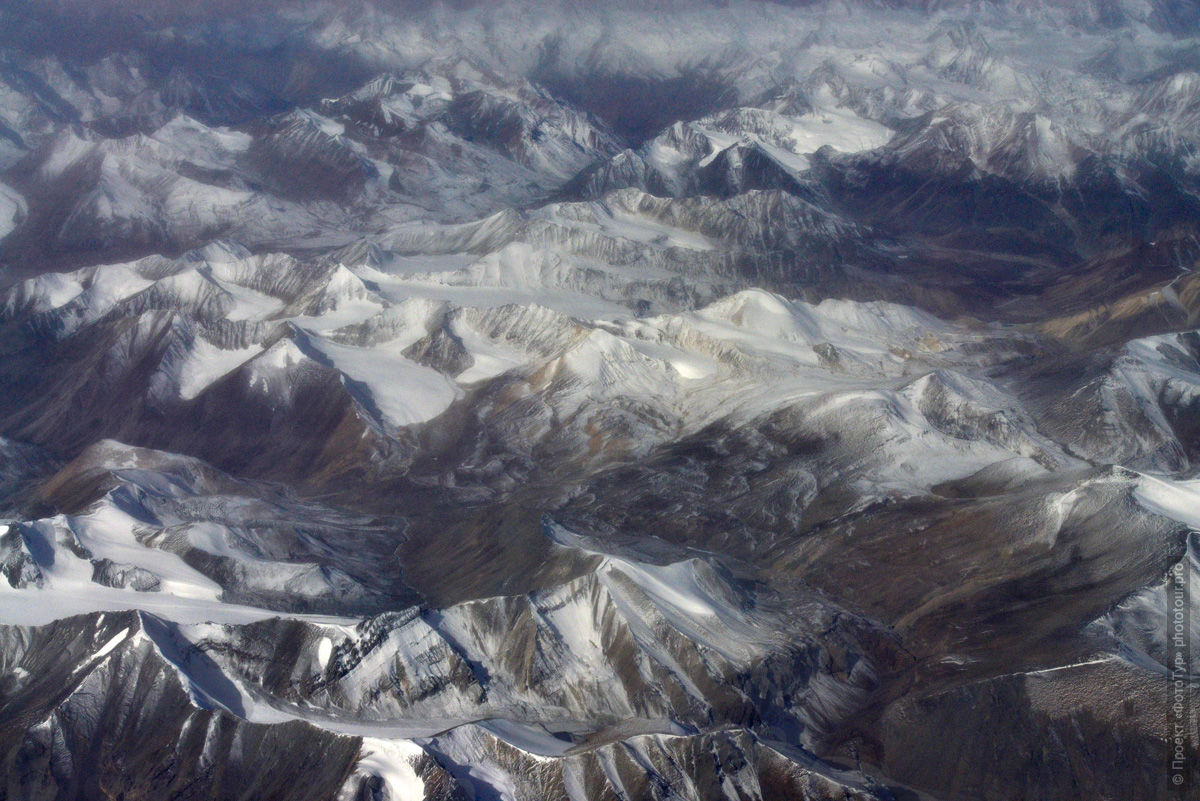
It is strongly recommended to reserve window seats when purchasing your plane tickets.
For those who want to photograph mountain ranges from the plane, seats between 25F and 30F are best.
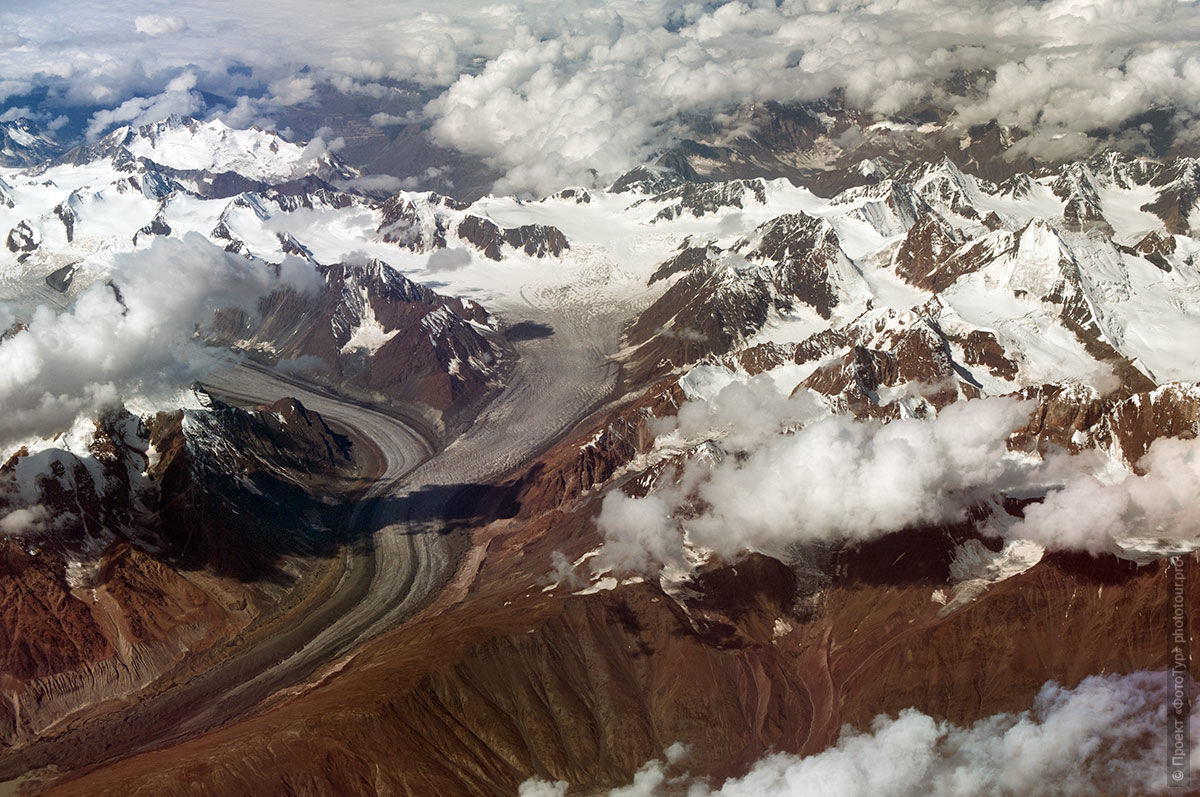
Photos of the Delhi-Leh flights can be found here:
We're Back in Ladakh! and Flight from New Delhi to Leh, Ladakh, April 2015
We fly to Ladakh, the plane turns over the valley, and lands at the valley's only airport—Leh.
Arrival in Leh: At Leh Airport, a guide meets participants right at the exit with a colorful "PHOTOTUR" sign.
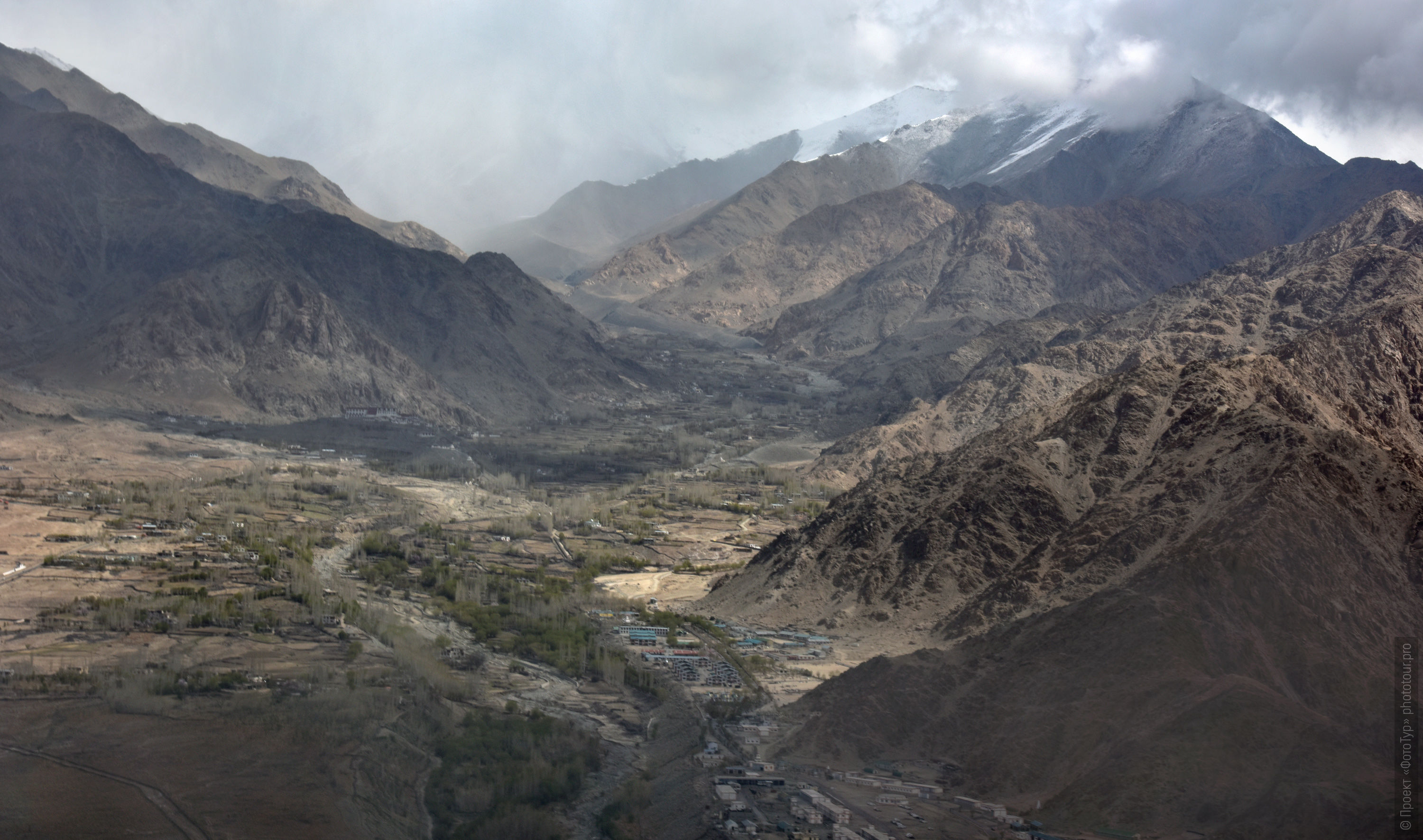
Transfer to the hotel, breakfast.
Leh is located at an altitude of 3,600 meters.
On the first day of the photo tour, it is crucial for participants to properly acclimatize to the altitude: we undergo acclimatization training, drink plenty of fluids, and rest for the first few hours after arrival at the hotel.
After acclimatization at the hotel, we set off on a leisurely, adaptive walk through the narrow streets of Old Leh: adobe houses, Buddhist stupas, and prayer wheels.
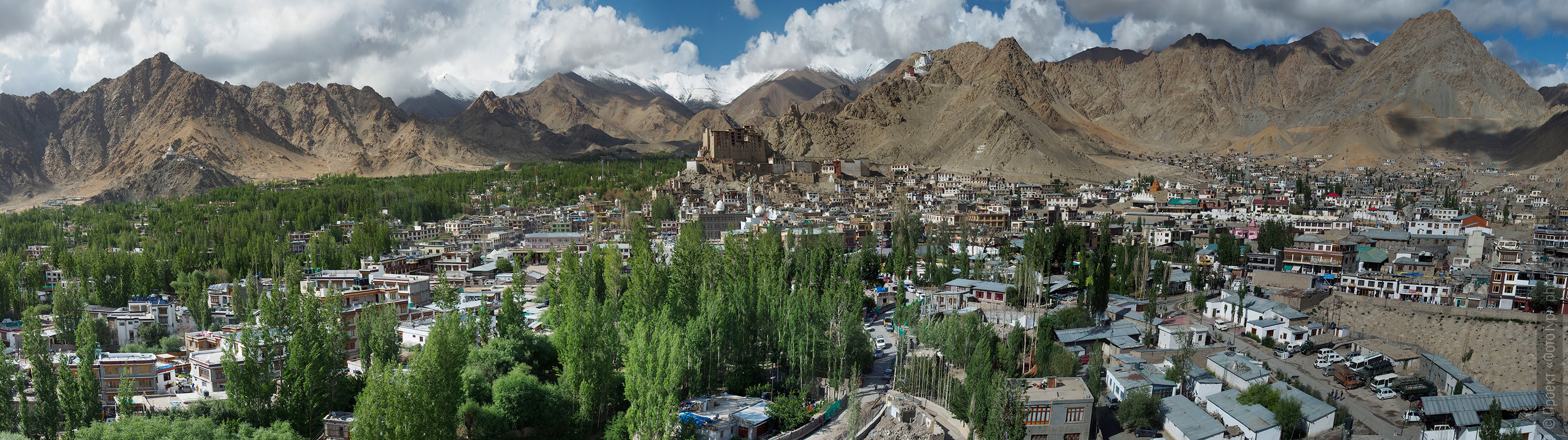
The old town of Lech was included in the list of the World Monuments Fund of UNESCO.
We'll finish our walk in the Soma Gompa Monastery, in the central part of Old Lech.
In the evening, a lecture on the introduction of Tibetan Buddhism into the culture.
Hotel in Leh.
Day 2, June 29: Shay Gonpa Monastery, White Stupas of Naropa, 36 km, 3,700 m.
The first active day of the tour:
our task today is to spend the day interestingly and at the same time to undergo gentle acclimatization so that the whole tour feels at its best in all senses of the word).
In the morning we leisurely set off towards the ancient monastery of Shay Gonpa and the White Stupas of Naropa.
To begin with, slowly, with stops, go up to the Buddhist monastery Shey Gonpa, walk through the ancient halls of the gonpa, admire the surroundings, from the upper huts of the monastery offer incredible views of the Ladakh Valley:
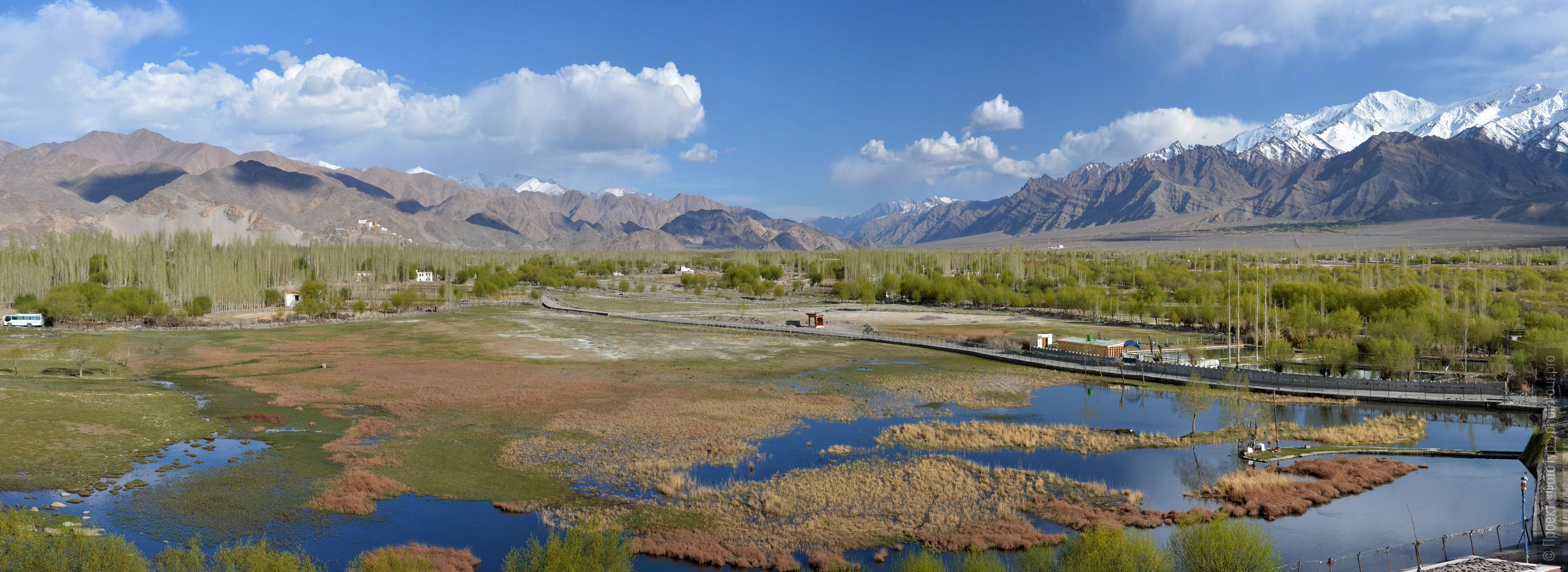
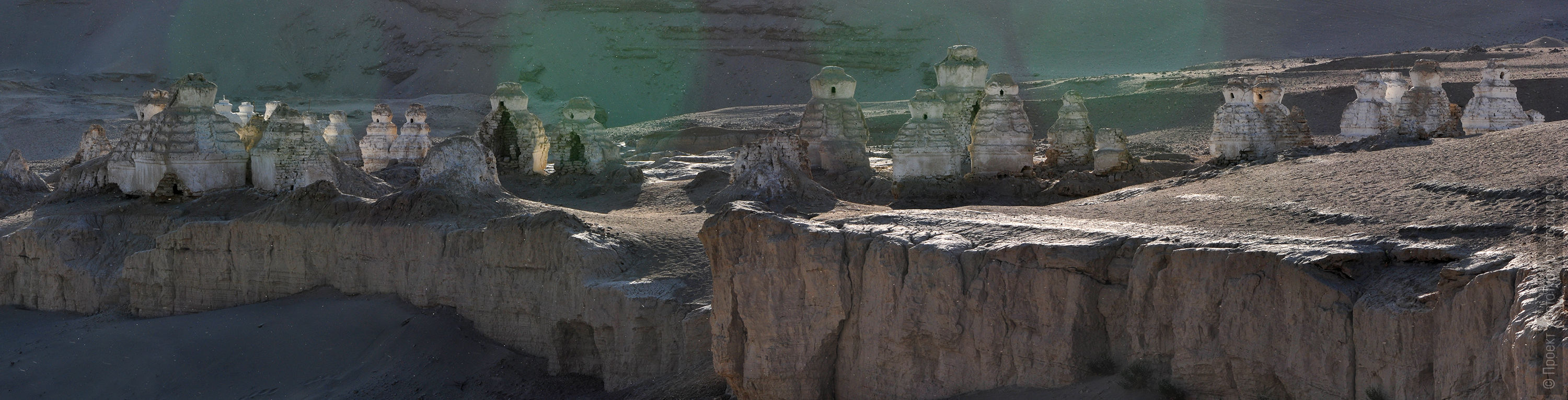
Then we go down to the 1000-year-old stupas of Naropa and already walk among the White Stupas, where the Great Tibetan Teacher meditated and practiced Buddhist practices.
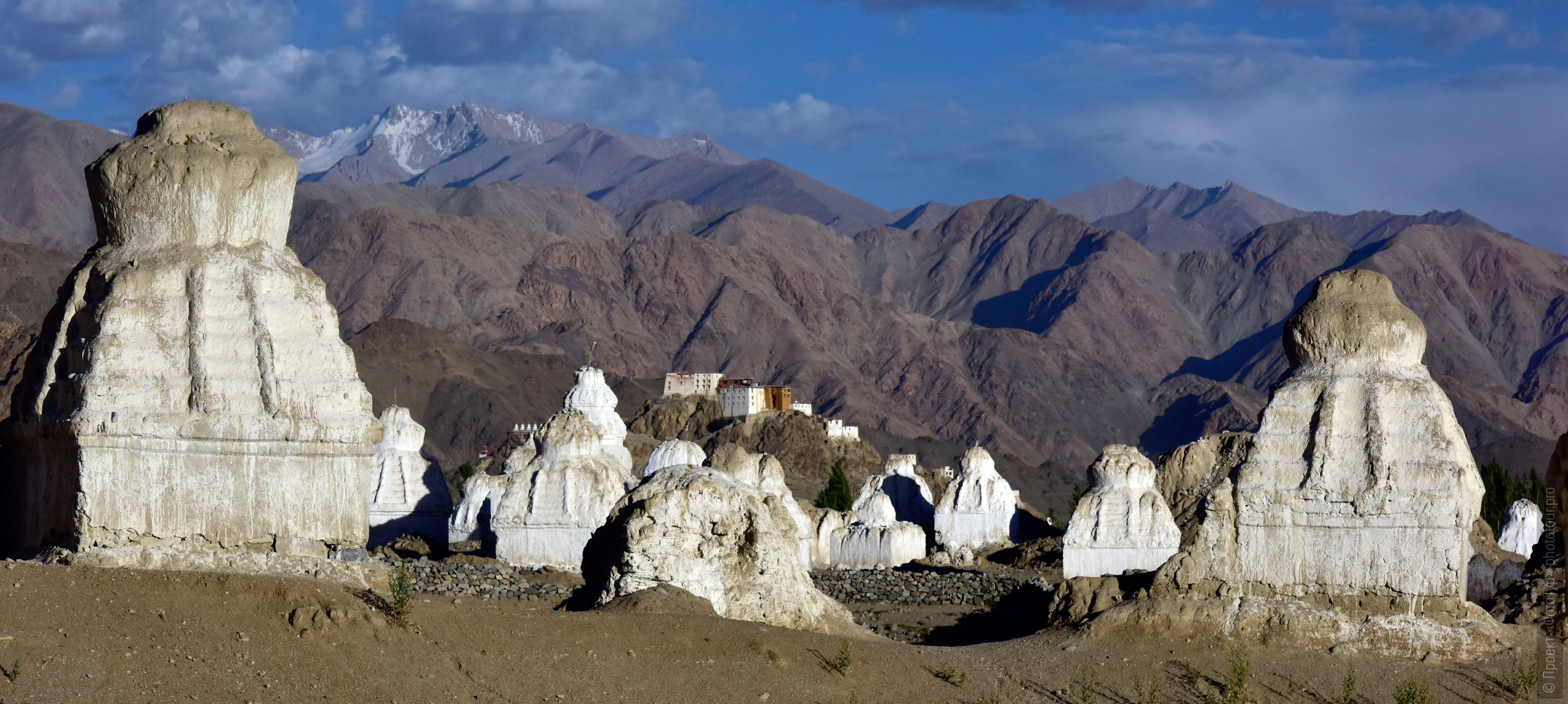
At this place, space and time simply froze - the White Stupa field is outside space, outside time is an amazing terrain, and the second half of the day is the best time to take pictures here:
It also offers magnificent views of the Tiksei Gonpa Monastery, which we still have time to visit during our tour.
Hotel in Leh.
Day 3, June 30: Alchi Gonpa. Lunar earth. Lamayuru, 157 km, 3,200 m.
Early in the morning we leave in the direction of the Lamayuru valley, down the river Indus.
On the way there are numerous stops in all interesting places for landscape photography, for example, the confluence of the Hindu and Zanskar rivers.
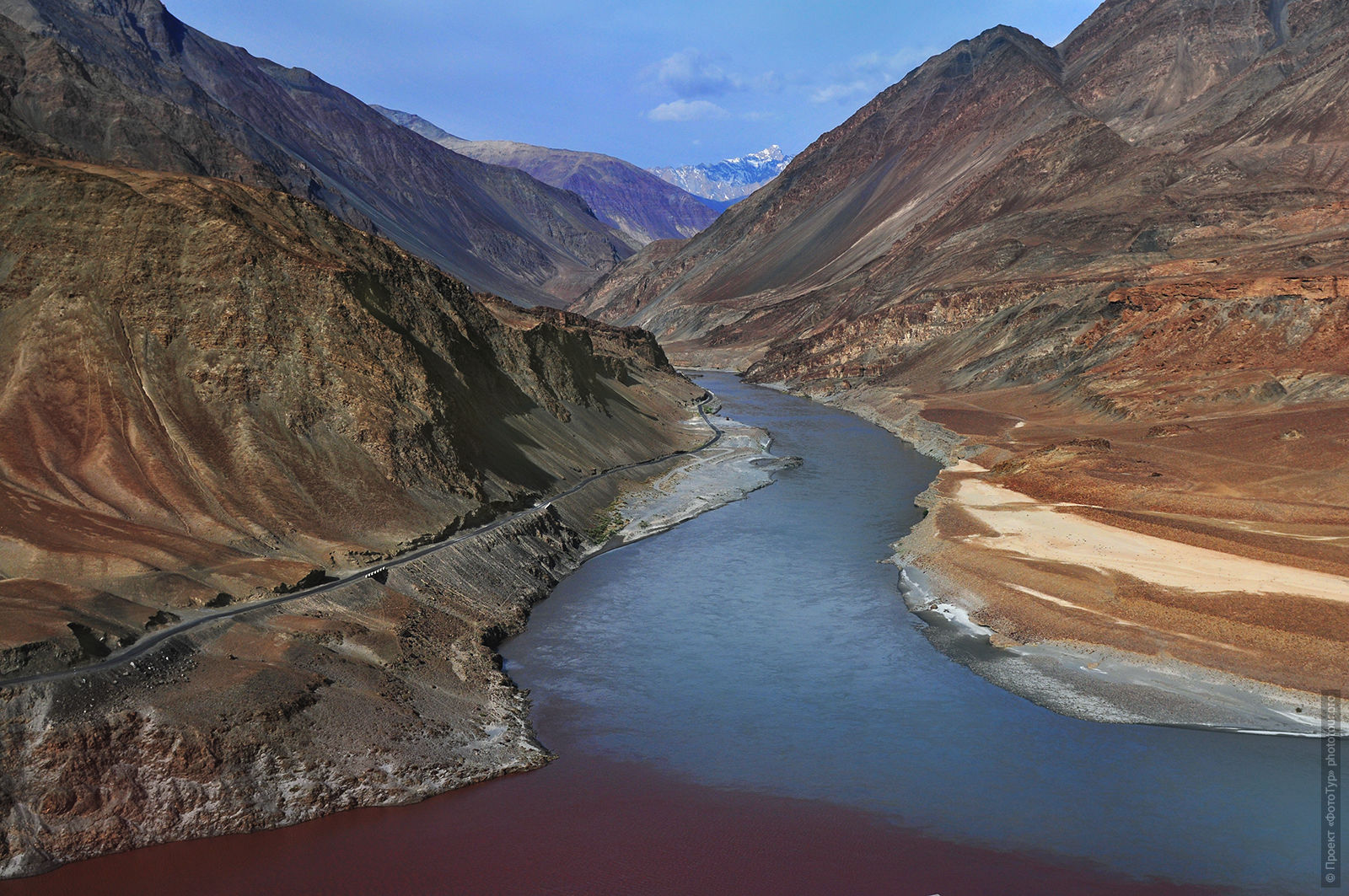
Through these mountain landscapes we will move to Buddhist monastic complex Alchi Gonpa.
Alchi is located on the banks of the Indus River at an altitude of 3250 m and 65 km from Lech (to the west).
The rest of the day we will spend in Alchi and adjacent villages to the monastery complex.
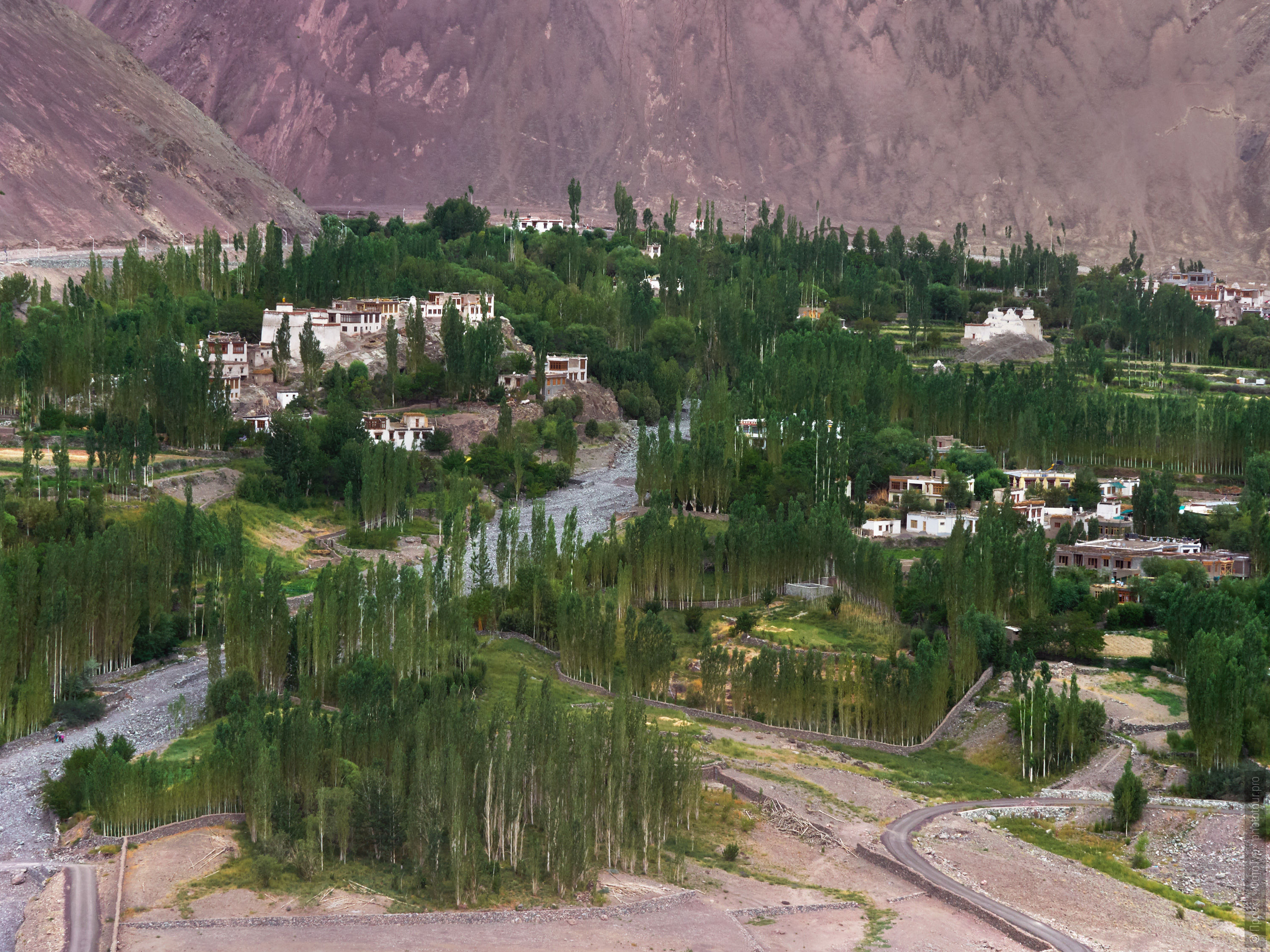
Buddhist monastery Alchi Gonpa is a Buddhist complex of temples, whose age exceeds 1000 years.
The monastery is the four temples of different periods surrounding the village of Alchi, Alchi Gompa - the oldest and largest structure.
The monastery of Alchi is now subordinated to the abbot of the Buddhist monastery Likir Gompa.
The monastery of Alchi was built by the great lama (guru) Rinchen Sanpo (958-1055).
The monastic records mention the Tibetan aristocrat Kaldan Sherab, who lived in the middle of the XI century, some researchers consider him the founder of the monastery complex Alchi Gonpa.
The village of Alchi is included in the group of villages that make up the Alchi Monastery complex, in addition to Alchi are adjacent Mangdu and Sundang Chung (now it is the Zanskar district).
The monuments of these villages are unique in style and craftsmanship, and that's where we will go after lunch.
The monastic complex of Alchi is unique: the artistic and spiritual characteristics of Buddhism and Hinduism are intertwined here with ancient Kashmiri traditions, as a result of which the murals of the monastery are especially interesting.
In old Kashmir, Hinduism and Buddhism were equally revered, and Alchi, built by Kashmiris, bears the imprint of this style.
The frescoes of the monastery are the oldest in the Ladakh valley.
In total, only two such monastic complexes have survived on our planet, in which Kashmir frescoes of a thousand years ago have been preserved: in Alchi and in Tabo, and both of them are unique, and are protected by the UNESCO Monuments Fund.
The Buddhist complex of Alchi includes huge Buddha statues, temples decorated with wood carvings of incredible beauty.
Alchi is beautiful, here we will meet completely with another Buddhism - Kashmir Buddhism, which existed more than 1,000 years ago.
And, by the way, it is in Alchi that the oldest Wheel of Samsara is in the world.
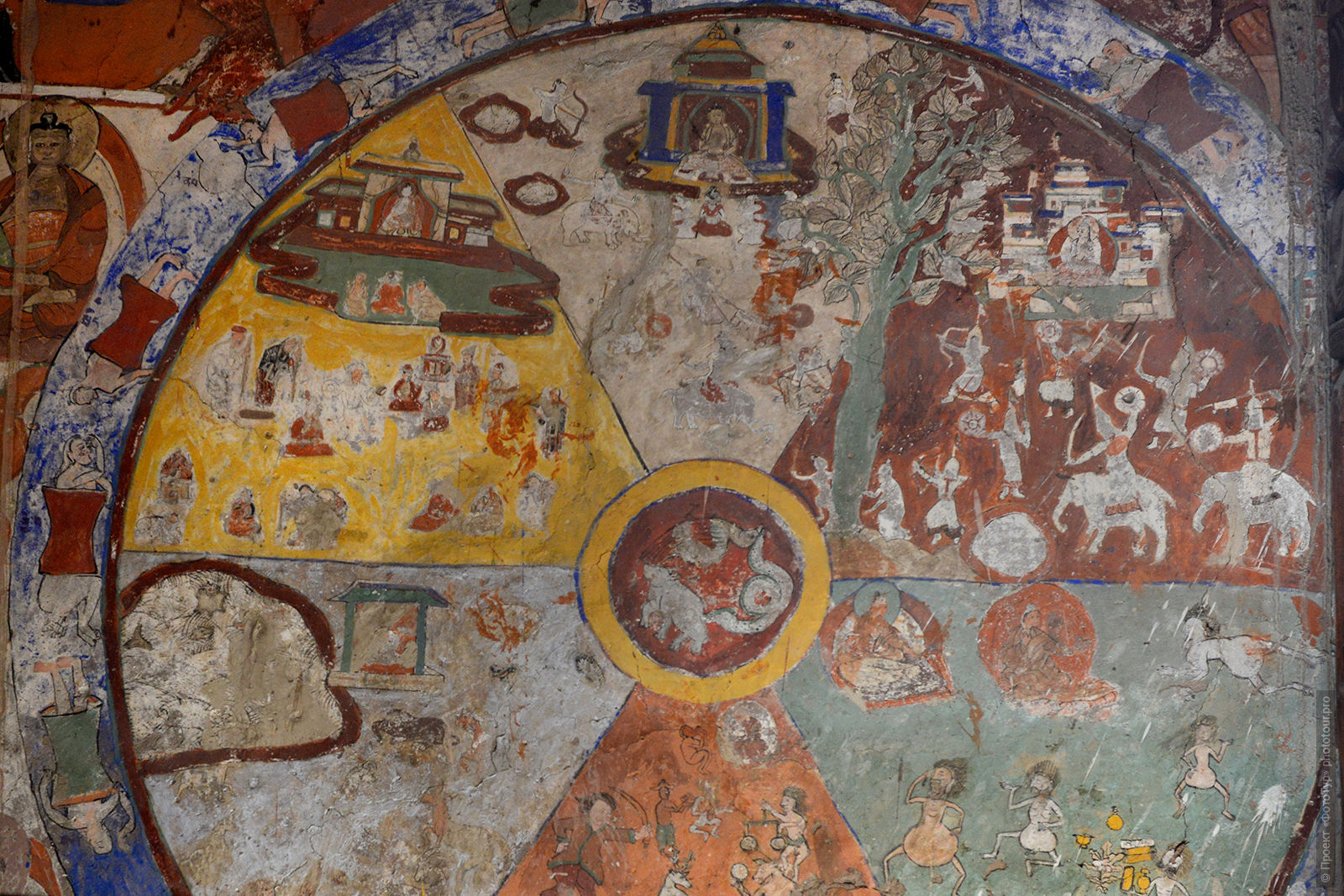
We continue to move towards Lamayuru.
A lot of landscape photography is planned: in Lamayuru we will get to the country of lunar landscapes, the legendary place Moon Land.
It is impossible to describe this place with words, it is necessary to see and photograph it.
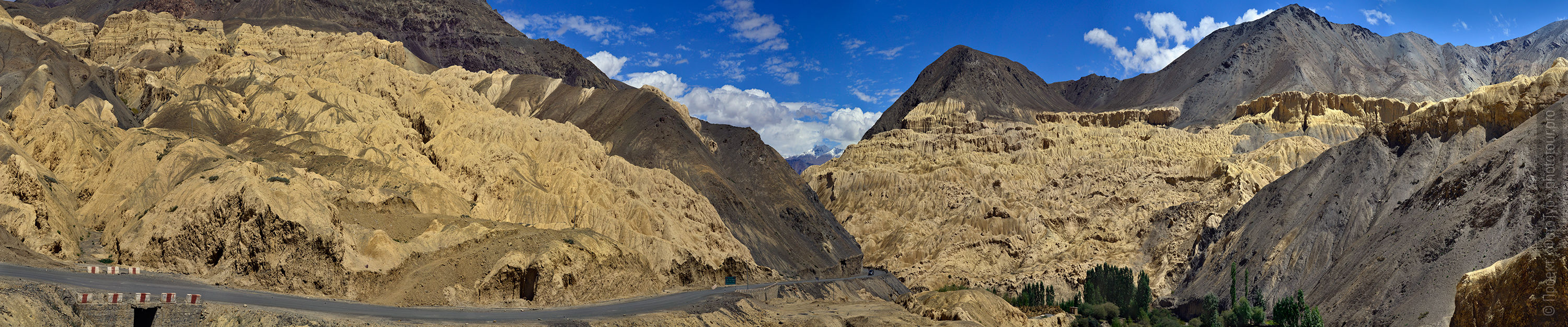
And closer to the evening we arrive at the Buddhist monastery Lamayuru Gonpa (Jungdrun - this is the sign of the swastika) - one of the earliest monasteries of Ladakh, its construction is attributed to Rinchen Sanpo (958-1055).
The monastery was founded in the XI century by the famous Teacher Naropa, after spending several years in meditation in the cave.
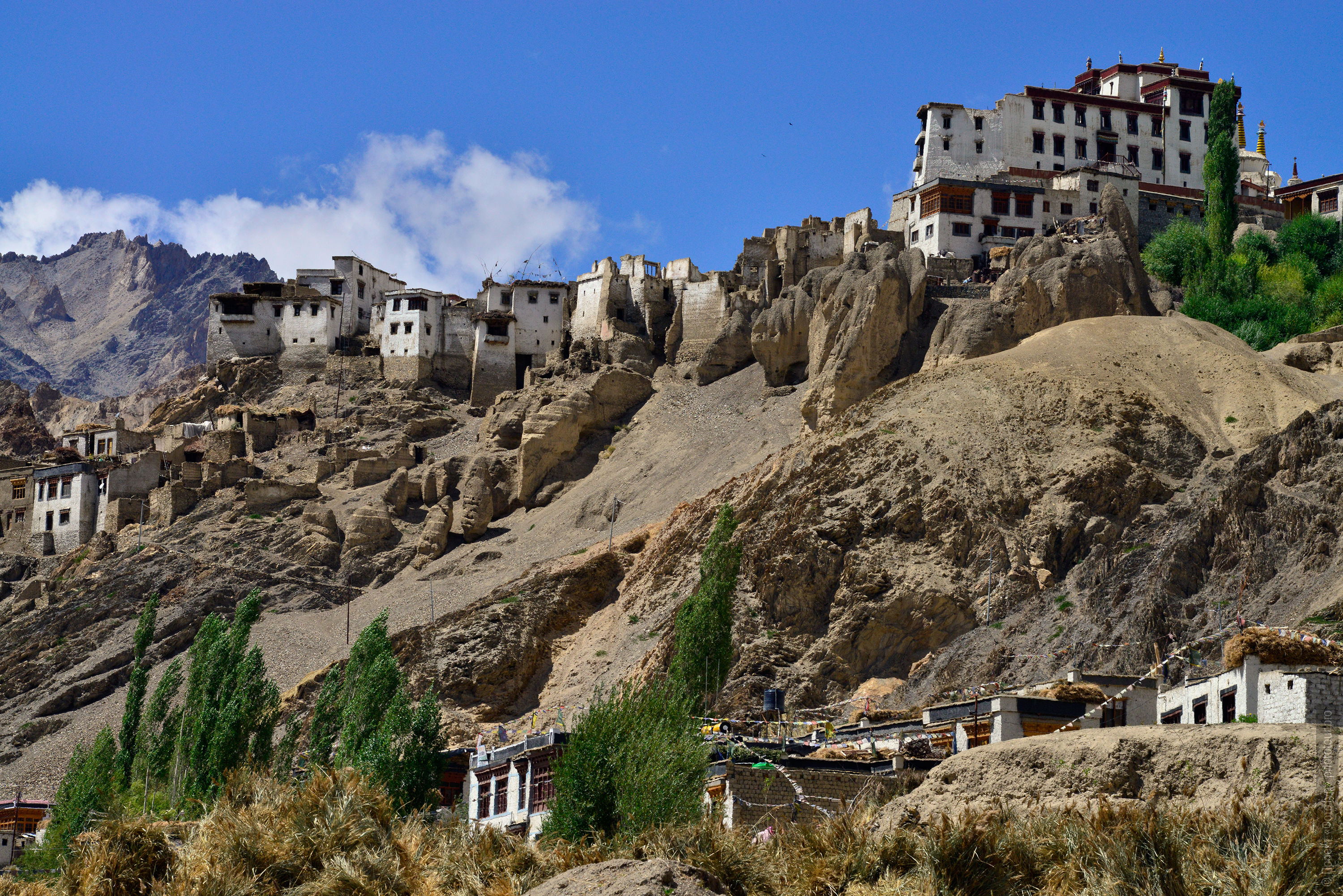
The monastery got its name from the plantation of sacred grain, which mysteriously took the form of a swastika (a swastika with a left-hand movement symbolizes Jungdrun Bon or a new Bon).
Now the Monastery of Lamayuru refers to the direction of the Buddhist school of Drikung Kagyu, but for a long time was a refuge for the followers of the Bon religion.
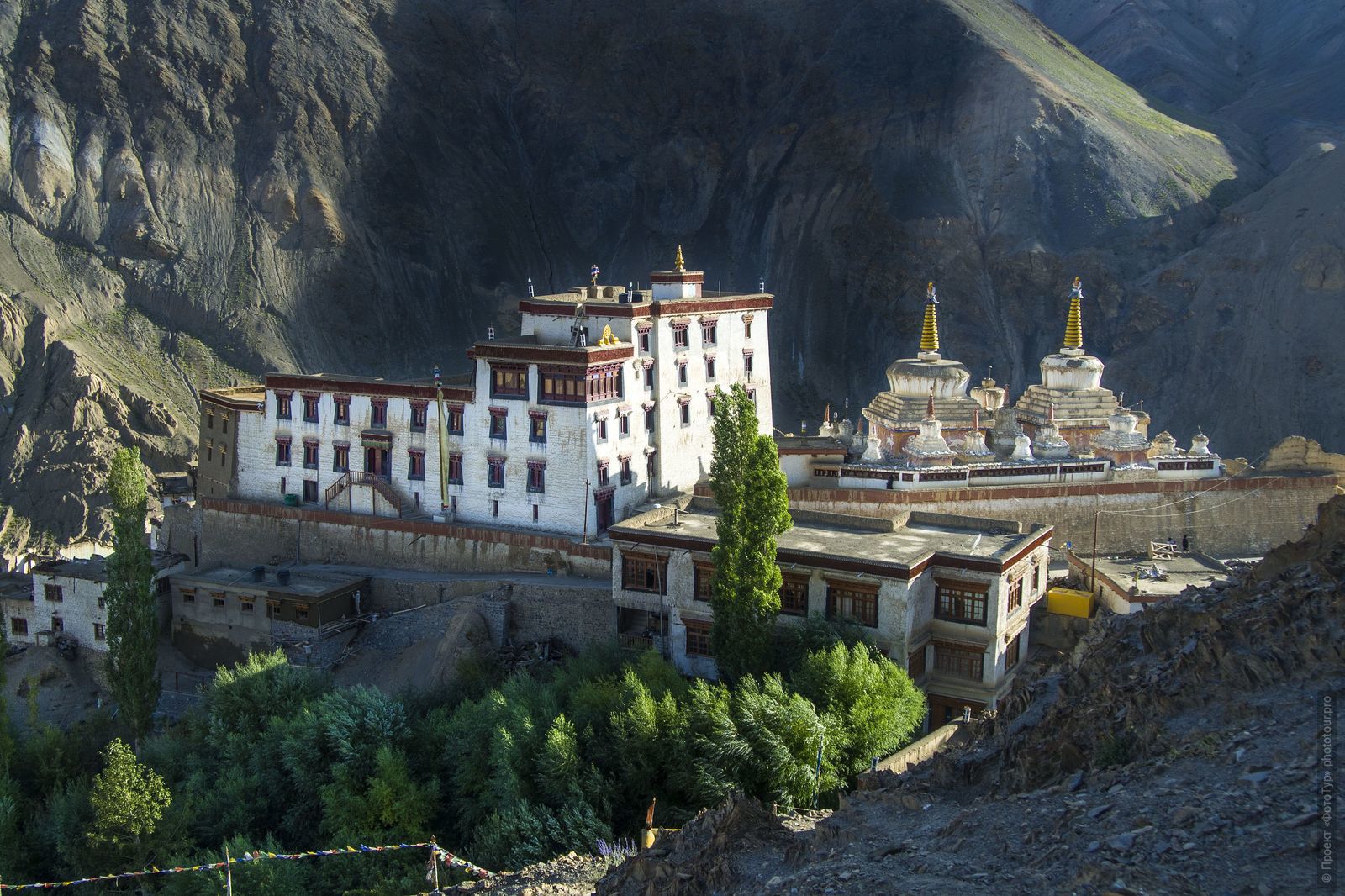
Guest house at the monastery of Lamayuru Gonpa.
Day 4, July 1: Lamayuru Gonpa Monastery. Buddhist Mystery Yuru Kabgyat (Yuru Kabgyat), 1 day. Dance Tsam, 3,200 m.
And the next two days we will witness and participate in the incredibly beautiful ancient Buddhist mystery of Yura Kabgyat with the performance of Dance Tsam - Dance of Lam high initiations in the masks of defenders of the Dharma.
Early in the morning we are present at the morning fire puja of the Buddhist holiday Yuru Kabgyat (Yuri Kabgyat).
Next day we take pictures in the monastery of Lamayuru on Buddhist mystery Yuru Kabgyat: Sacred Dances Lam, Dance Tsam.
There will be a lot of bright ethnographic portrait and genre photography.
Any Mystery of the Tsam Dance is an unforgettable sight, and in Lamayuru Gonpa the holiday Yuru Kabgyat (Yuri Kabgyat) has also very Bonn roots:
from the morning fiery puja to the very end of the mystery.
Photography is fully authorized.
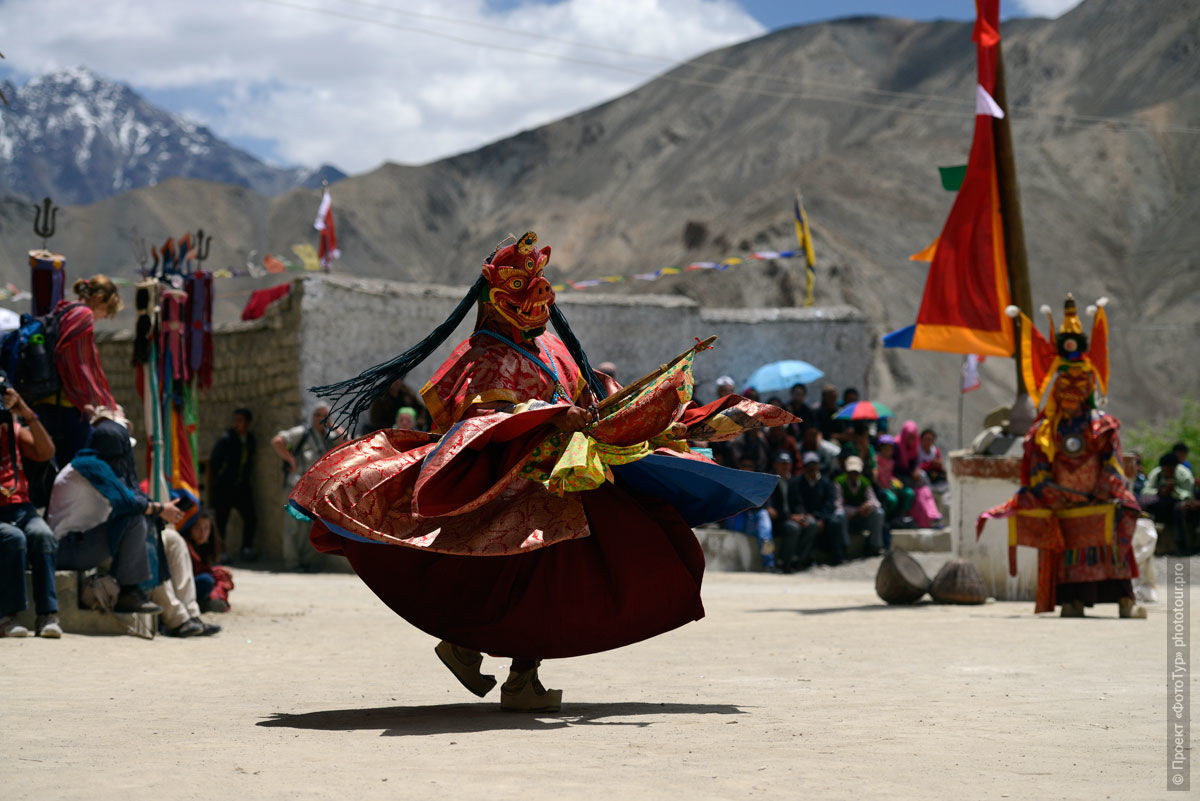
Talk about Buddhist mysteries with the performance of the Dance of Tsam - in moderation useless -
this is an incredible action, words can not describe it - there is too much happening and at all levels:
from a simply grandiose bright incredible spectacle, when the square is facing 54 Masks, led by the majestic Mahakala - captures from rapture,
to subtle levels of consciousness - in fact, any Buddhist mystery is a very thorough cleansing at the level of the mind, body, and consciousness, and often in the life of a person very much changes after the mystery.
This is not a theatrical action, it is a very powerful energy process, perhaps one of the most honest and real today, coming to us from the depths of millennia.
After the end of the first day of the mystery, we will definitely visit the ancient alpine village of Van La.
Van La is located away from the main road and tourists almost never come here, however it is in Vanla that is one of the oldest temples of the Lamayuru Valley - Vanla Gonpa.
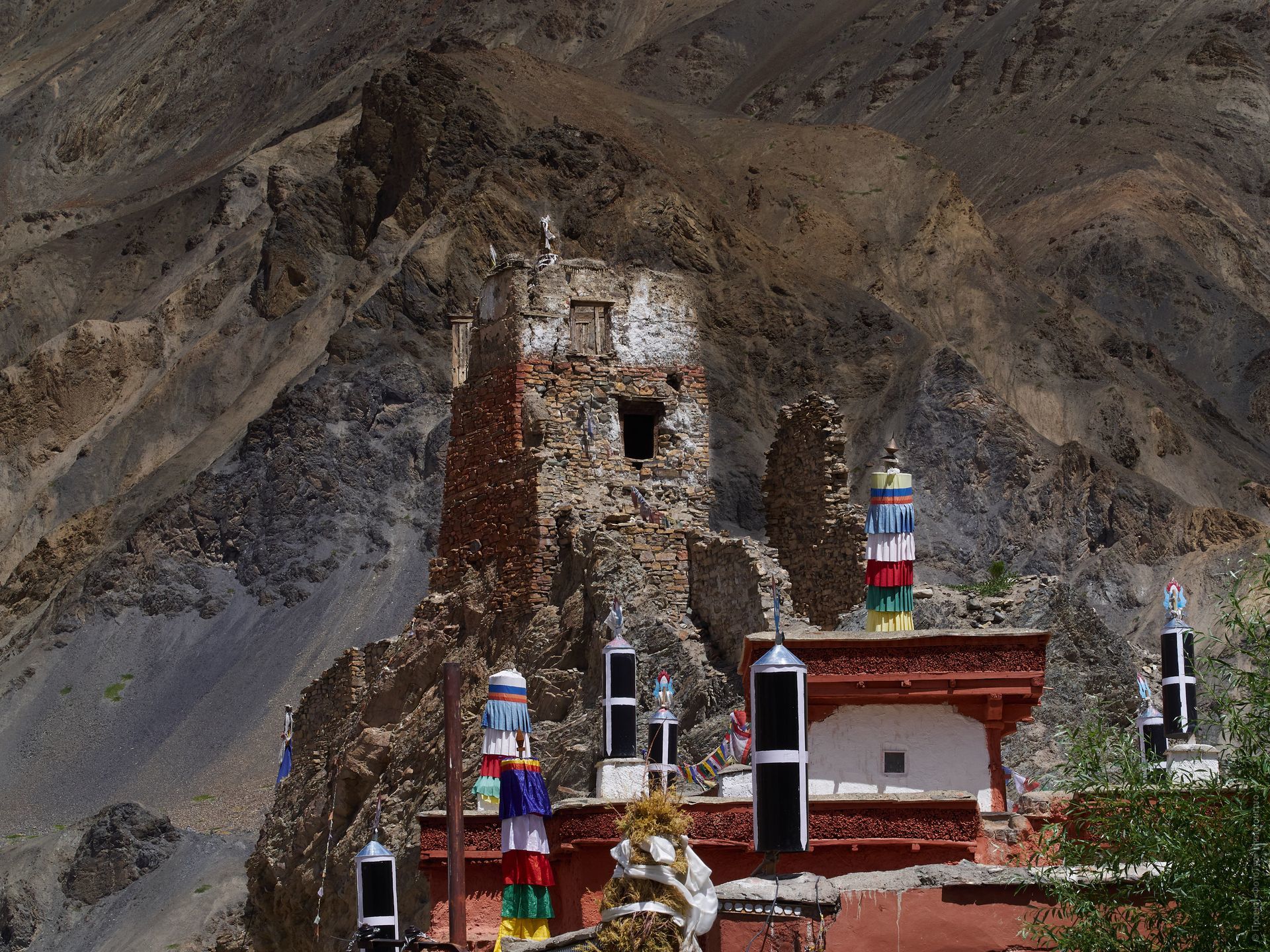
The villagers themselves belong to the Aryan group Drok Pa.
These tribes, both racially and culturally, are very different from the other inhabitants of the Ladakh Valley.
Religion Drok Pa is more reminiscent of the Bon religion in its traditions (this is the original religion of Tibet).
Van La Gonpa itself is a work of art, and dates back to the same period as Alchi Gonpa, but the safety of the ancient monastery of Van La is simply amazing:
unlike the many-visited Alchi, here everything remained almost in its original form.
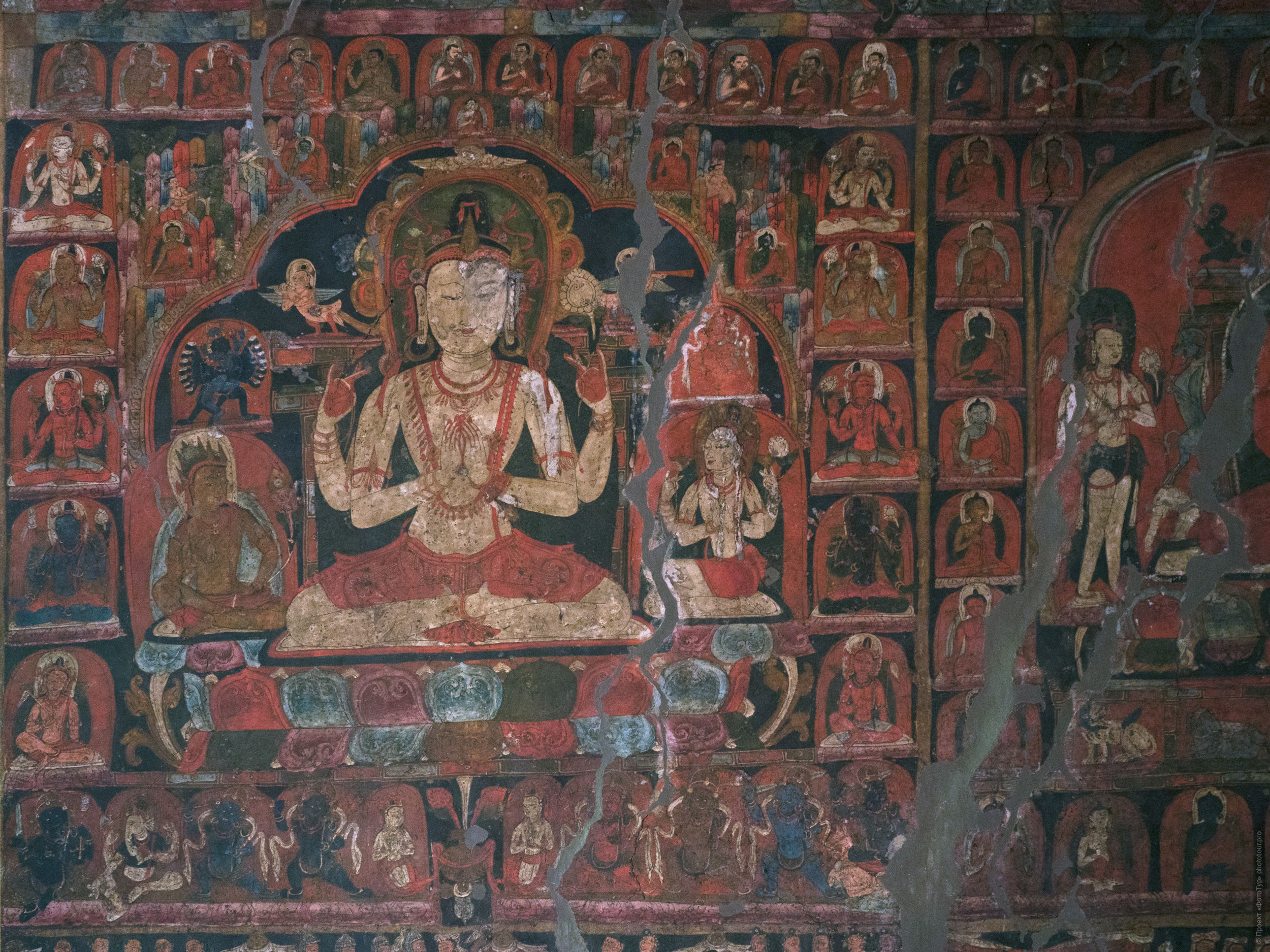
Guest house at the monastery of Lamayuru Gonpa.
Day 5, July 2: Lamayuru Gonpa Monastery. Buddhist Mystery Yuru Kabgyat (Yuru Kabgyat), 2 day. Dance Tsam, 3,200 m.
The second day of Buddhist mystery Yuru Kabgyat (Yuri Kabgyat).
Early in the morning - puja in the Monastery of Lamayuru, then from morning till evening we take pictures of Buddhist mystery Yuru Kabgyat in the monastery yard.
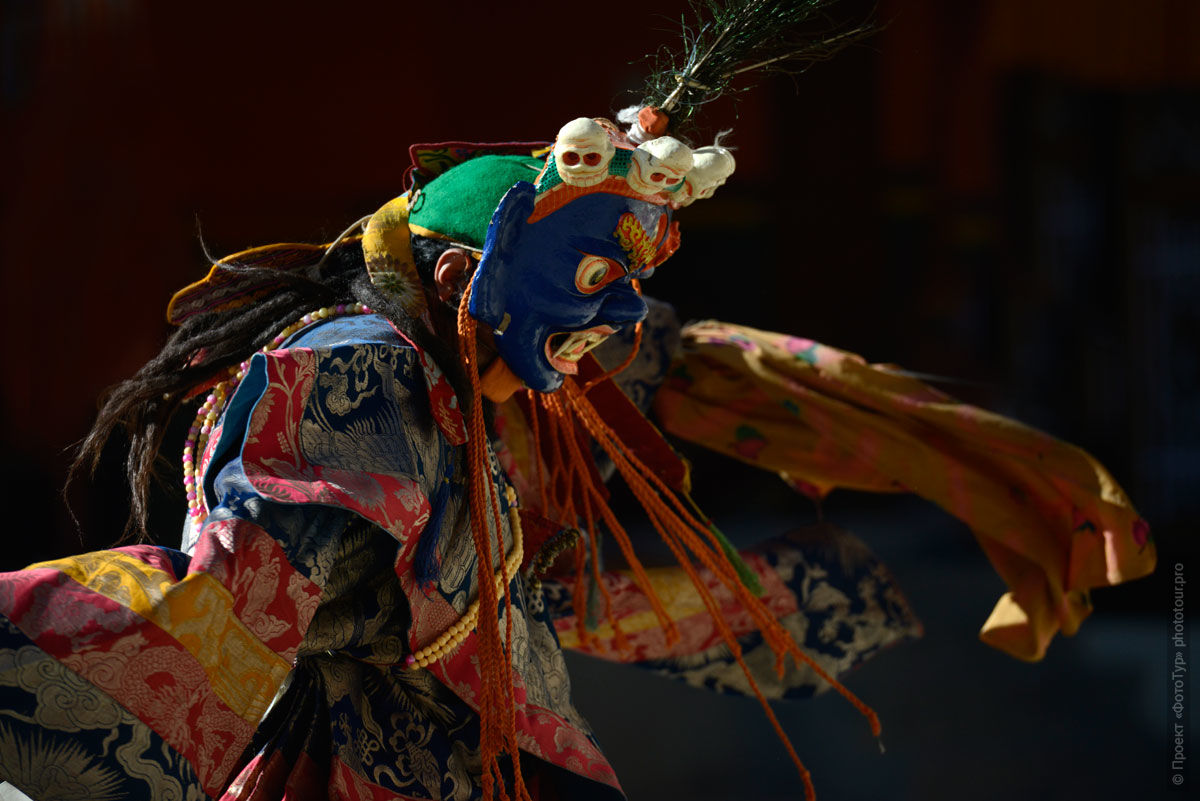
During the day - photography in the monastery complex Lamayuru Gonpa.
In the evening - ethnographic photography in the village of Lamayuru.
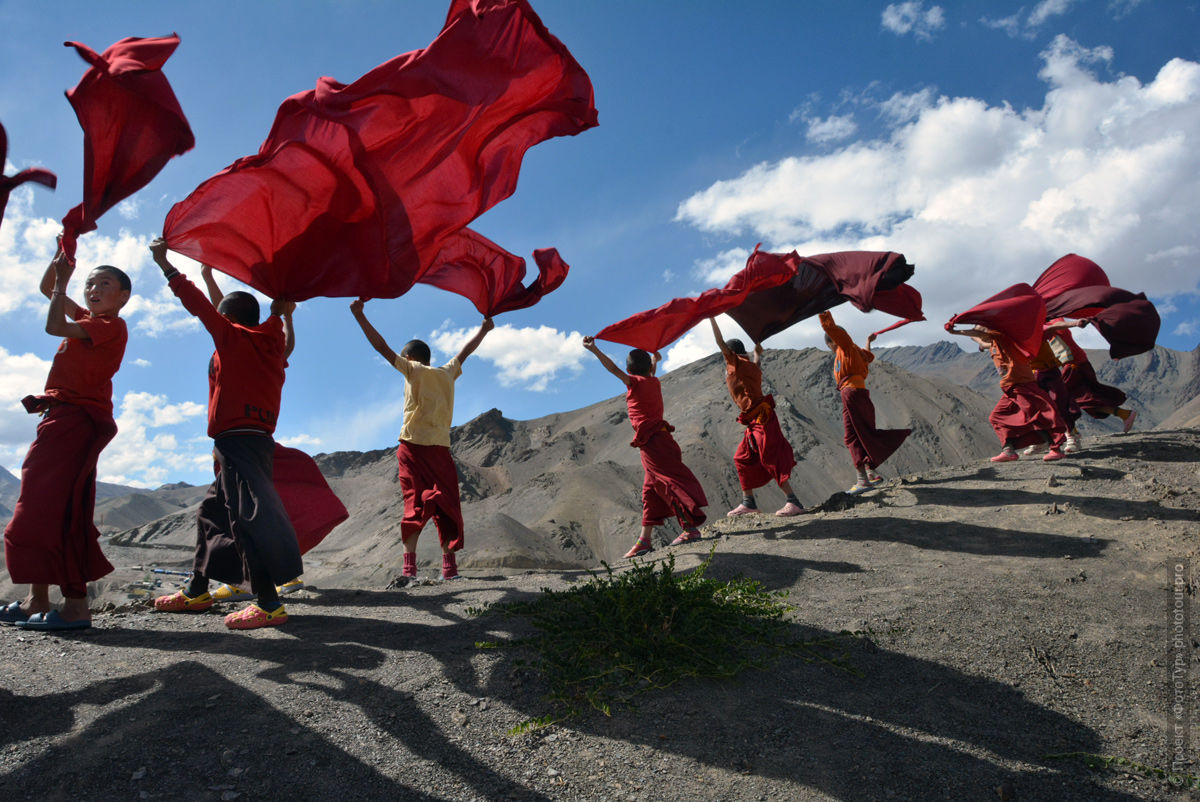
For two days in the village of Lamayuru, there will be almost no free time - as planned:
- visiting the meditation center in Lamayuru,
- very active photography in the evenings in the village of Lamayuru,
- Morning and evening photography of the landscapes of Moon Land and the Red Mountains from the upper army road - our cars will leave there early in the morning and for evening photography.
Photos from the valley of Lamayuru can be viewed in our photo gallery: Lamayuru Valley + photos.
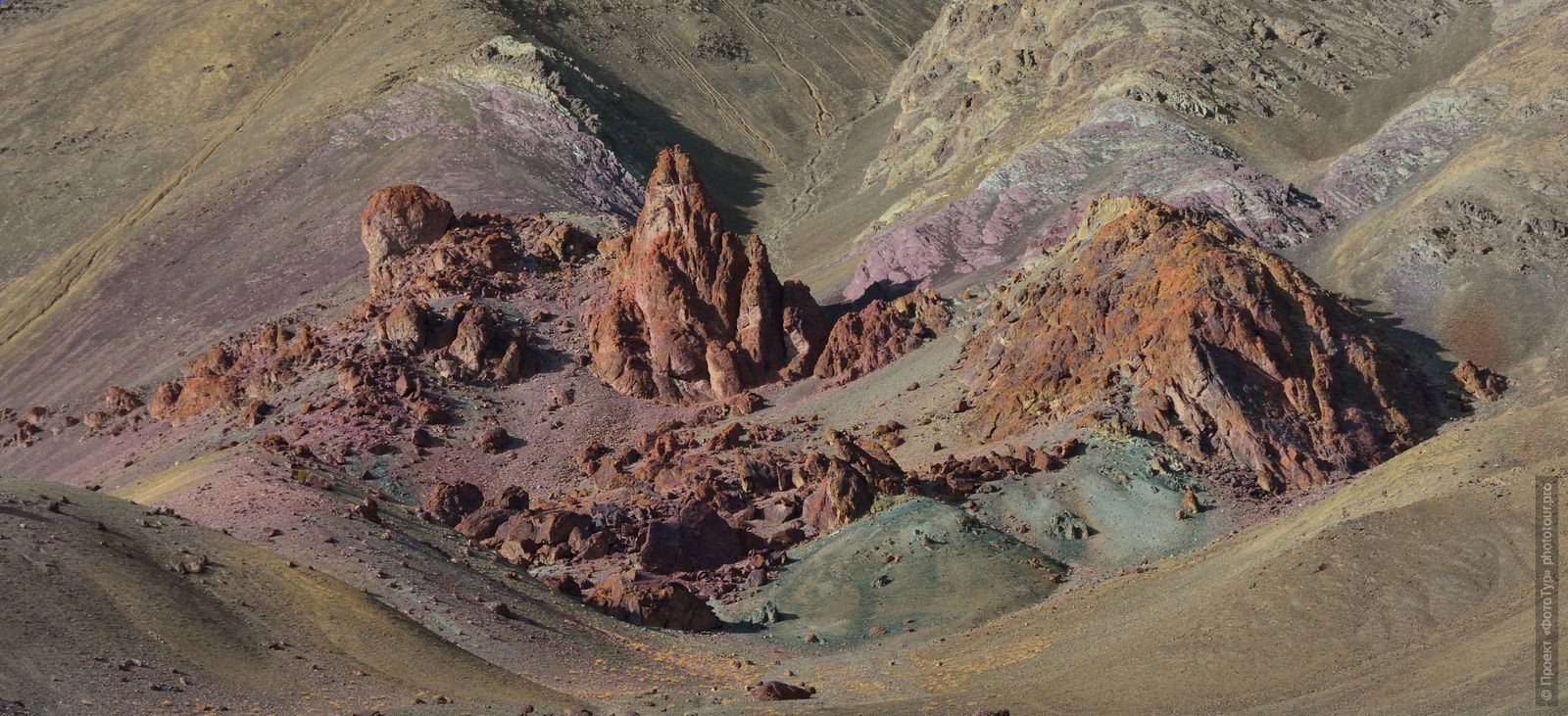
Guest house at the monastery of Lamayuru Gonpa.
Day 6, July 3: Fotula Pass. Da Hanu Valley through Sanjak and Hangral. Aryan village Donkar, about 130 km, 4,000 - 3,200 m.
Early in the morning we go to the pass Fotu La, 4 100 m for the morning photographing:
there is incredibly beautiful in the mornings and before us completely different Lamayuru will appear - the bright oil landscapes of Moon Land will leave and they will be replaced by powerful floating massifs of lazy mountain hills covered with fogs.
This is a completely different beauty, and it seems that you get into another world, another place, separated not by 17 km, but by many thousands.
This Ladakh is beautiful - here landscapes are constantly changing, everything is different here - so different that the time changes with the surrounding nature - it becomes very long, because it is impossible - the illusion of the brain - it is impossible to visit so many different places at the same time.
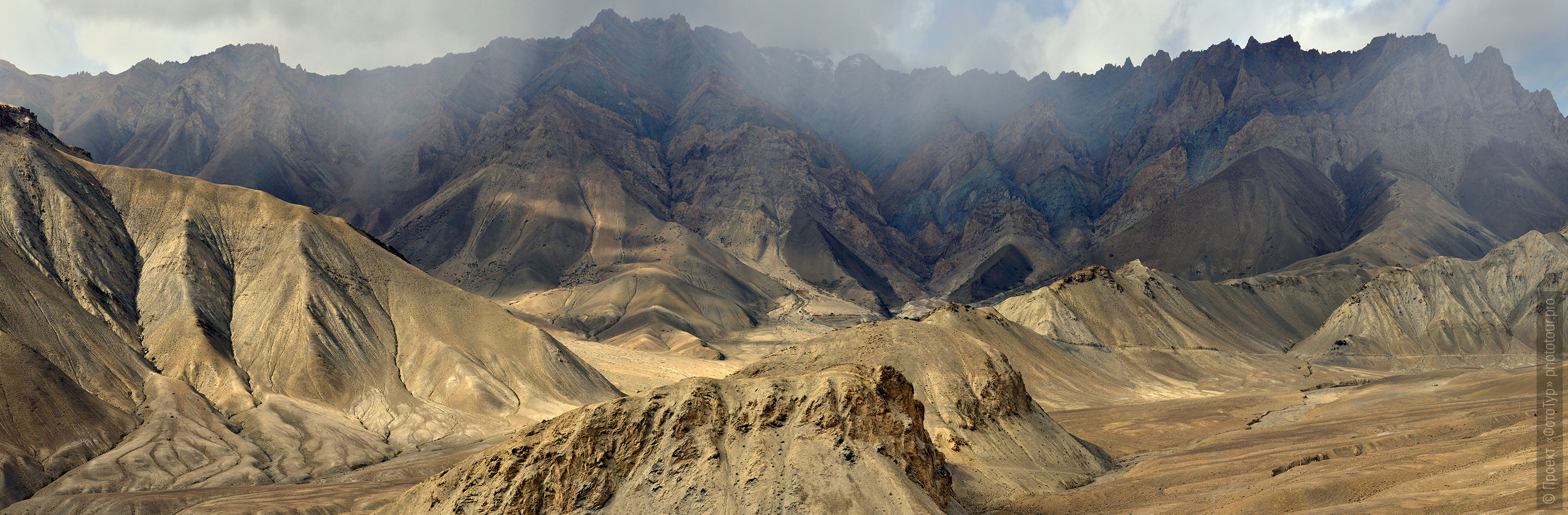
And then we will go on our way to the valley of Da Khan already on a quite non-tourist road - this is a small route through Sandzak and Hangral, which only local residents use to get to remote villages.
The road is a primer, but the places that we will see on this day have practically preserved their primordiality, there is still no civilization at all - in many villages there is still no electricity.
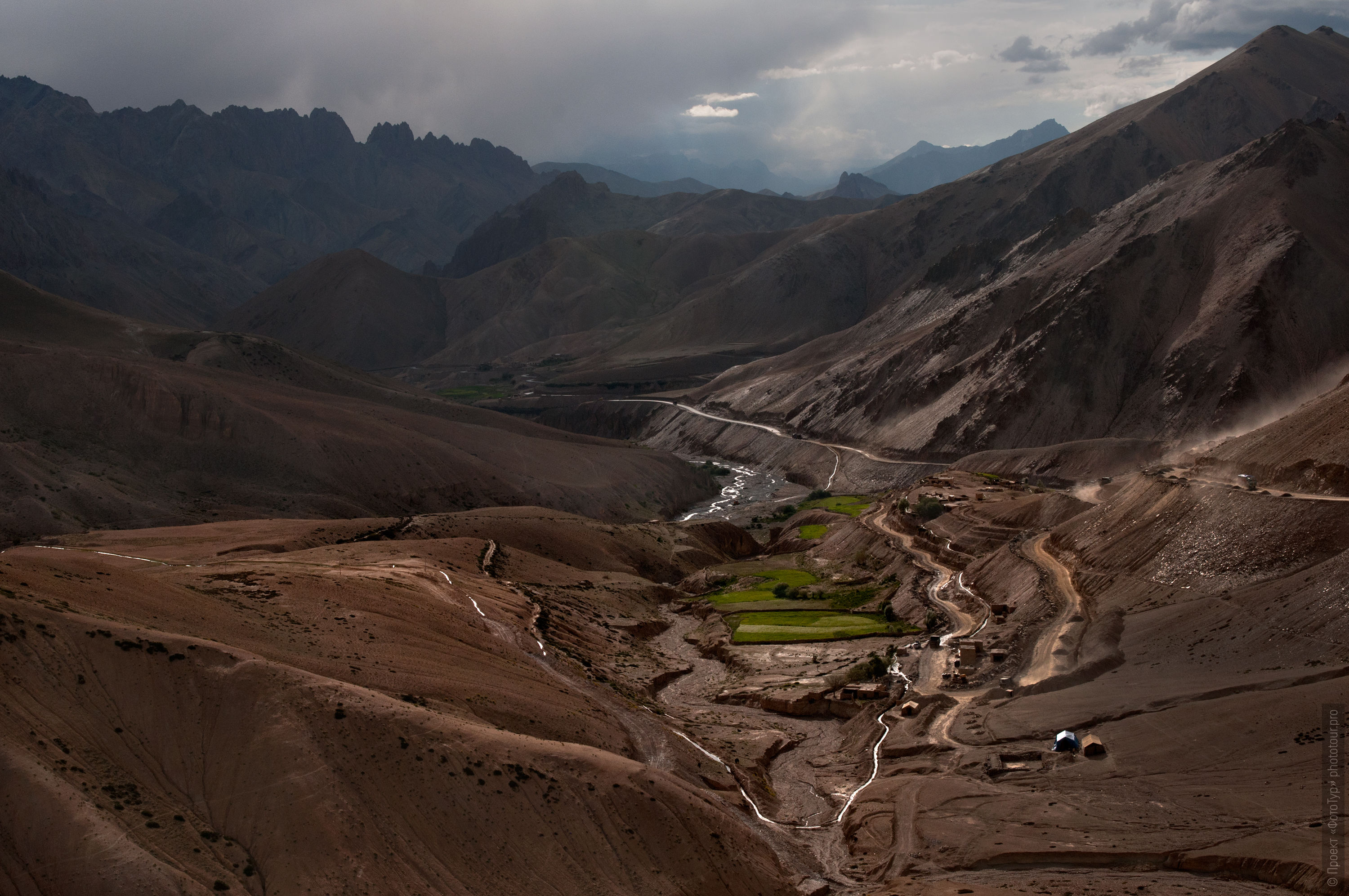
A little bit about the valley of Da Han, which lies our way:
The valley of Da Hanu until recently was closed to tourists and only in 2010 there was an opportunity to freely travel to this valley in the measure.
The villages of the Dha-Hannu valley:
Around 2000 people live in Ladakh of Aryans and live in the territory of 5 villages and only marry within their ethnic group.
It was in these villages that Hitler organized expeditions "for the Aryan blood".
At present, there are two Dardish tribes in the territory of the former Ladak kingdom, who have retained their native language: the Dardas from the Dragon, and the Dardas from Da (Dha).
The first became Muslims in the 16th century.
The most interesting case is represented by darts from Da (Dha - Hanu). They did not accept Muhammad's faith, but Buddhism was not fully accepted by them either - their religious practices more closely resemble the ancient pre-Buddhist religion of Bon.
Thanks to this, they were able to preserve their cultural uniqueness.
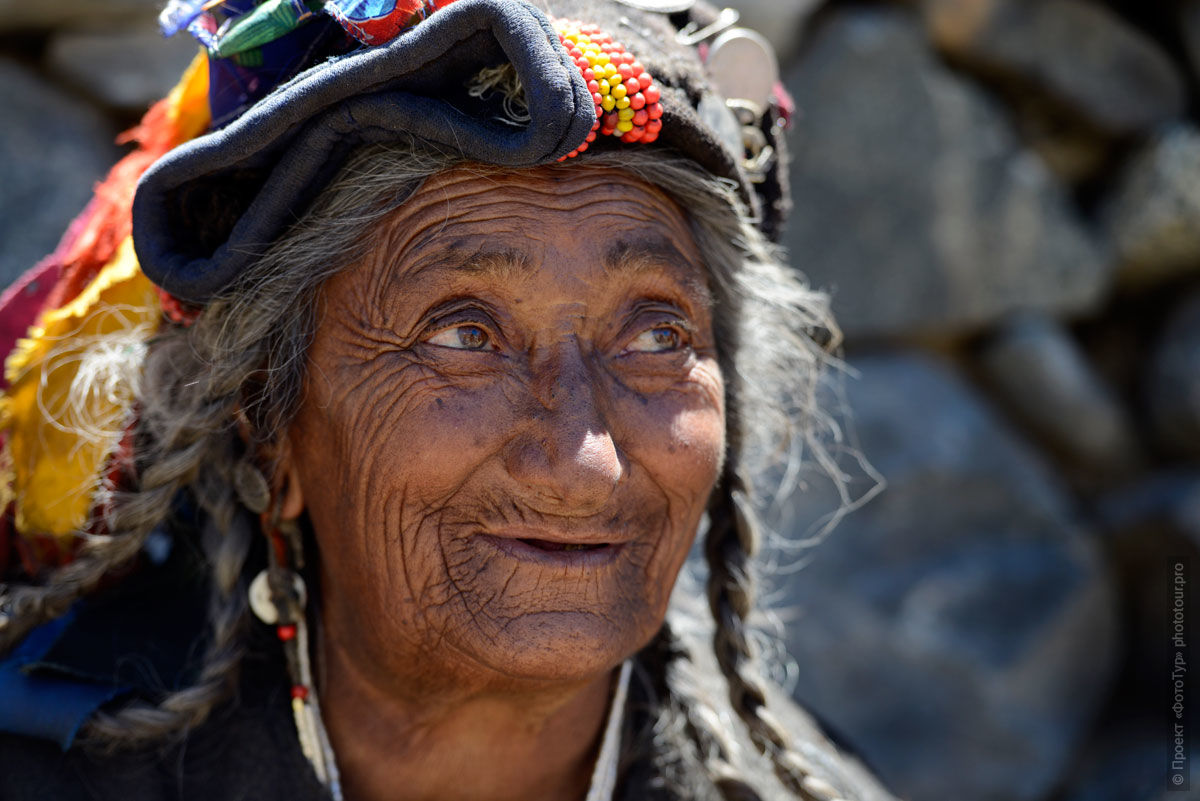
Their external dissimilarity and feature is not only in the form and features of the face, but also in the details of their ethnic clothing.
All men and women wear a headdress, the main ornament of which is the red flowers of the Physalis (wild strawberries), which protect them from demons and bring wealth.
In all forms of art, the symbols of the swastika and the sun are present in the drkpa: carved ornaments on houses, ornaments of antique utensils and household utensils.
There are also many natural and astronomical symbols.
Drkpa surprisingly combine mixed traditions with respect to food - they do not eat poultry meat and cows, but keep them for eggs and milk. Eat only lamb.
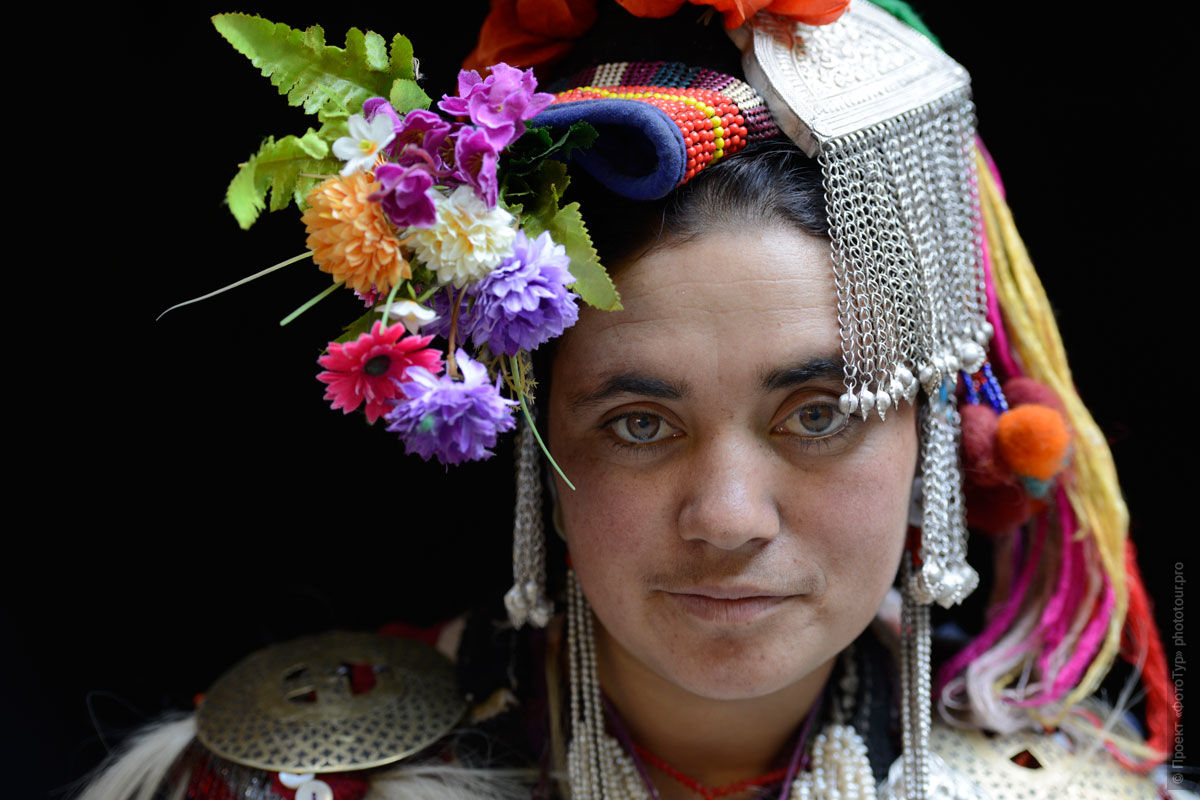
In the evening we come to the Aryan village Donkar, to our friend Sonam Rinchen, to a new guest house.
Hotel in the village of Donkar.
Day 7, July 4: Aryan village Donkar, a picnic with local women. Portrait photography.
Today, let it be a surprise - we will describe it literally in two words:
we will have a completely non-tourist entertainment - a picnic with local Aryan ladies.
Similar events are not held in Ladakh any more) - but we came to the village to our very close friends and therefore:
in the morning we plan a picnic on the river bank - by the way, the water in the river is delicious, terrificly tasty - real glacial and very clean, the village takes drinking water from the river.
We need to prepare for a picnic and together with the local ladies we will participate in preparing dishes of Aryan cuisine.
Next - a joint trapeze and dance-songs, that's as much as it goes).
Need I say that at all stages, photographers will have the opportunity to engage in photography?)
Today, a walk through the village is planned, a visit to old Aryan houses, where everything was preserved 200-400 years ago, taking photographs in the homes of local residents.
Hotel in the village of Donkar.
Day 8, July 5: The ancient Aryan village of Hanu Ekma. Return to Leh, about 200 km, 3,200 - 3,600 m.
We continue our movement through the Da Hanu Valley.
In general, Da Khan is such an authentic place and really real that there are so few tourists here - in fact, there is nowhere to even have a bite to eat, there is no tourist service.
Of course, I would like the valley to survive longer.
We are wrapped with food in the morning, and in the afternoon we will have a small picnic snack somewhere on the shore of the Hindu.
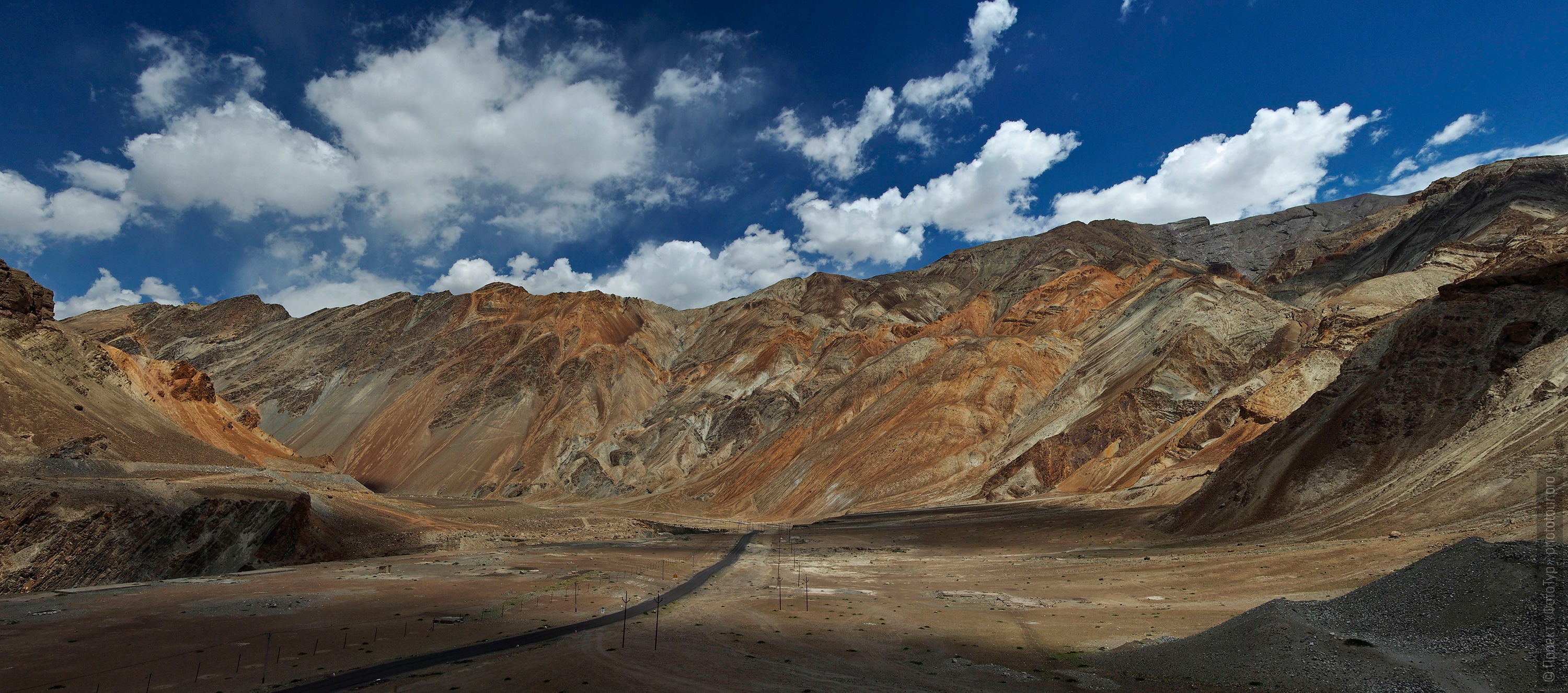
In the meantime, on the road - to the ancient stone village of Hanu Ekma.
With numerous stops for landscape photography, we move towards the Aryan village of Hanu Yokma, which was open to visitors only in 2013 and we were the first tourists to come there).
We will spend about 2-3 hours in the village: visiting the local school, the stone houses of the village, which are composed of river stones precisely fitted to each other without the use of cementitious mass.
We will also visit the local church and visit the homes of local residents, as well as observe and photograph all stages of the manual weaving of canvas fabrics - in Hana Ekma, it has been preserved in its original form.
Late in the evening we return to Leh.
Hotel in Leh.
Day 9, July 6: Free day in Leh. Old city, bazaars, 3 600 m.
Free day in Leh. Rest after our adventures.
What can I do on my free day?
And to many:
1. drink fresh fresh or coffee with fresh pastries in coffee shops and tips of the Main Market,
2. Shopping (there will be no further time),
3. Independently wander through the narrow streets of the Old City, which is under the protection of UNESCO:
here still preserved houses and palaces of the 14-16 centuries, you can enter into them and quite a house with the remains of things of those times.
4. Walk independently to Gonpa Namgyal Tsemo and Leh Palace.
5. Engage in genre photography on the streets of Leh.
Yes, and you never know what else).
Hotel in Leh.
Day 10, July 7: Morning puja at the Tiksei Gonpa monastery, about 40 km, total 3,600 m.
We leave for the Tiksei Gonpa Buddhist monastery for morning puja:
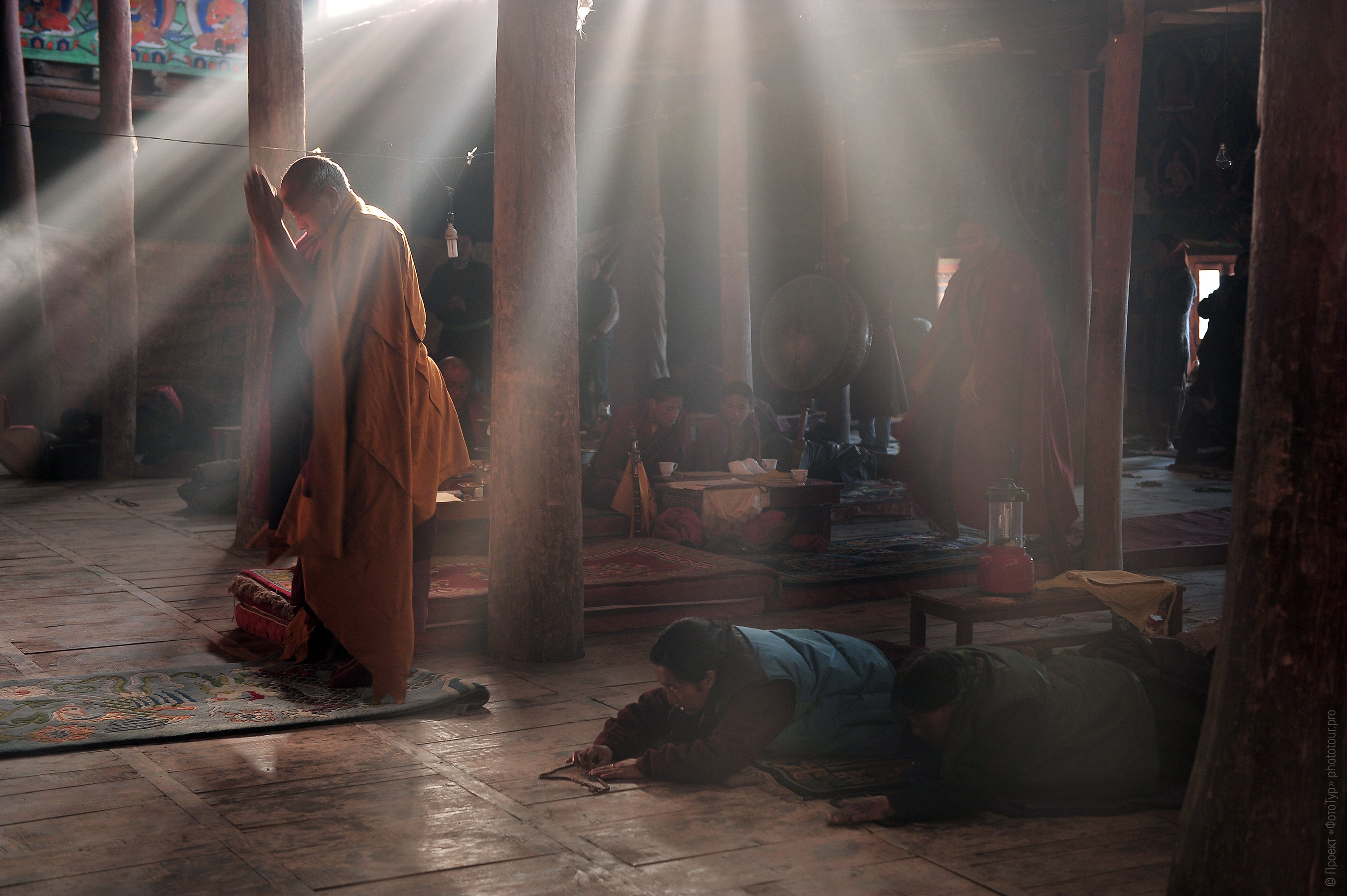
This is a good and logical conclusion to our tour of Ladakh:
the opportunity to meditate in a very calm and bright environment, remember, summarize what is happening during the tour, think about plans for the future.
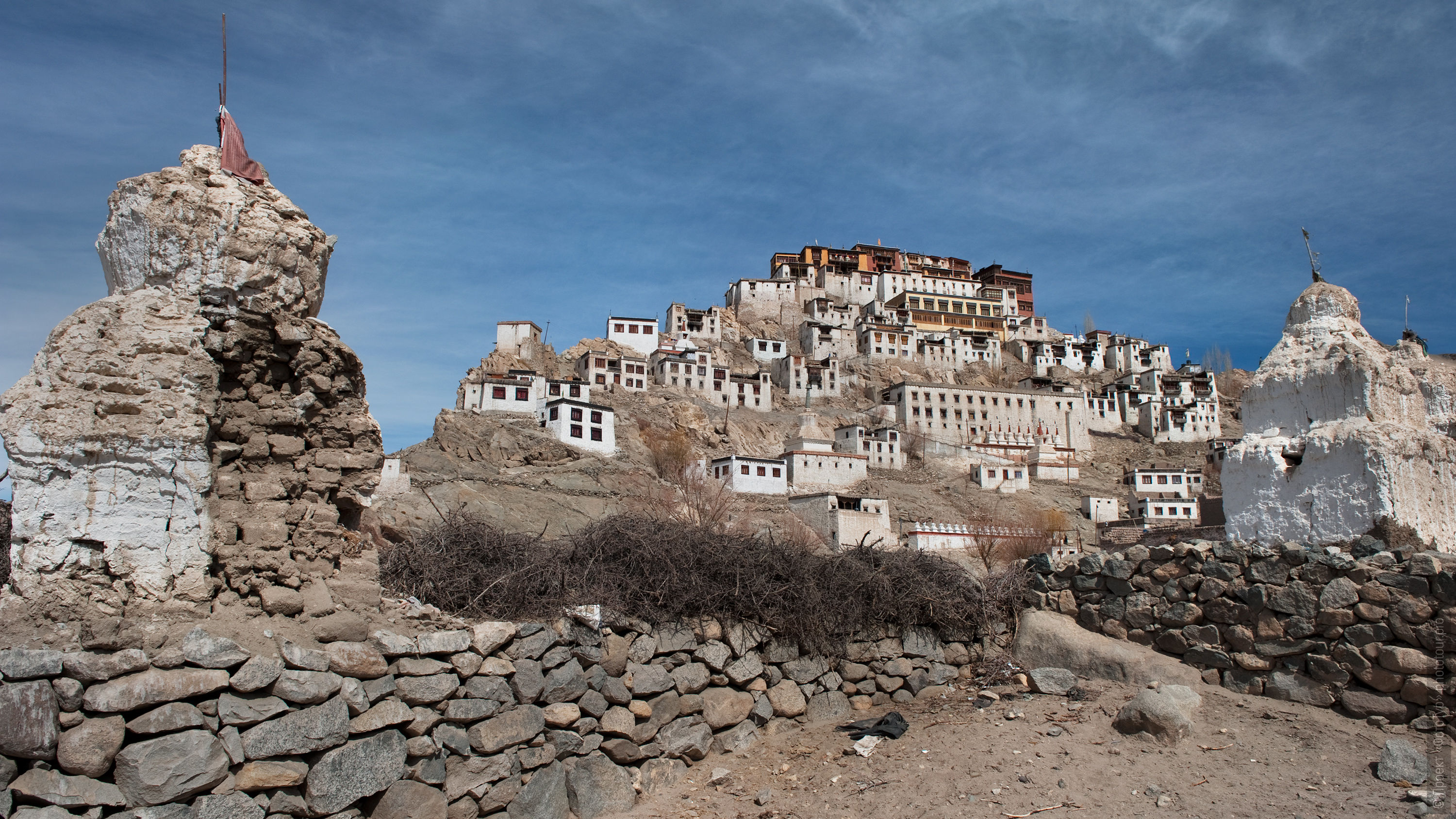
Tiksei Gonpa Monastery is the largest in central Ladkh.
It is as if descending from the top of the hill, located on its slope, with the most important buildings at the top, and less significant at the bottom.
The monastery strongly resembles Potala in Lhasa, Tibet, the former Dalai Lam palace.
Therefore, Tixei Gonpa is often called the 'Mini Potala'.
Tiksey Monastery, as well as Leh, is located at an altitude of 3600 above sea level, in the upper Indus, 19 km from Leh.
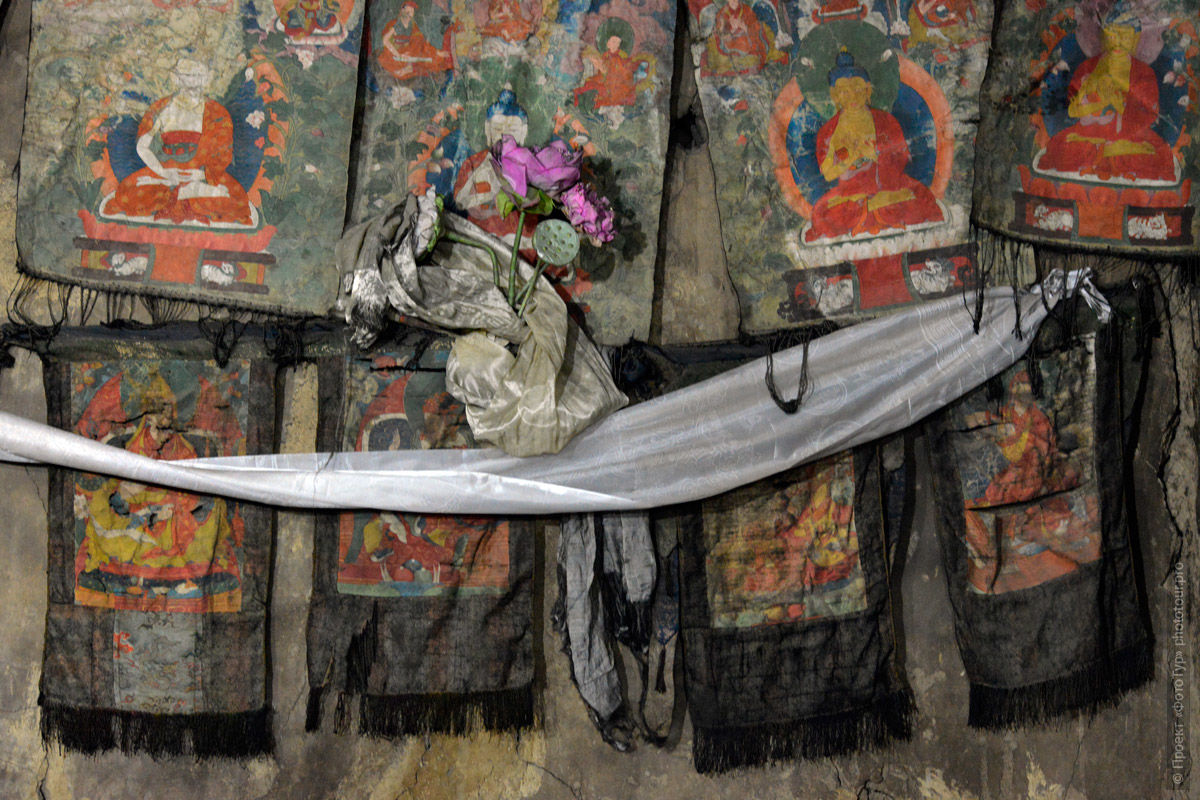
This is a huge 12-story complex of buildings with chortens, statues, thangkas, frescoes, and weapons (swords are stored in dharmapal shrines).
The new Buddha Temple of Matreya, built for the visit of His Holiness the Dalai Lama XIV in 1970, is also noteworthy.
The 15-meter statue of Maitreya, the largest in today's Ladakh, occupies two floors.
The Tiksei Gonpa complex also includes the neighboring convent.
There is something to do for the whole day and more:
the walls of the monastery are kept by ancient paintings, corroded by time, they are still literally mesmerizing.
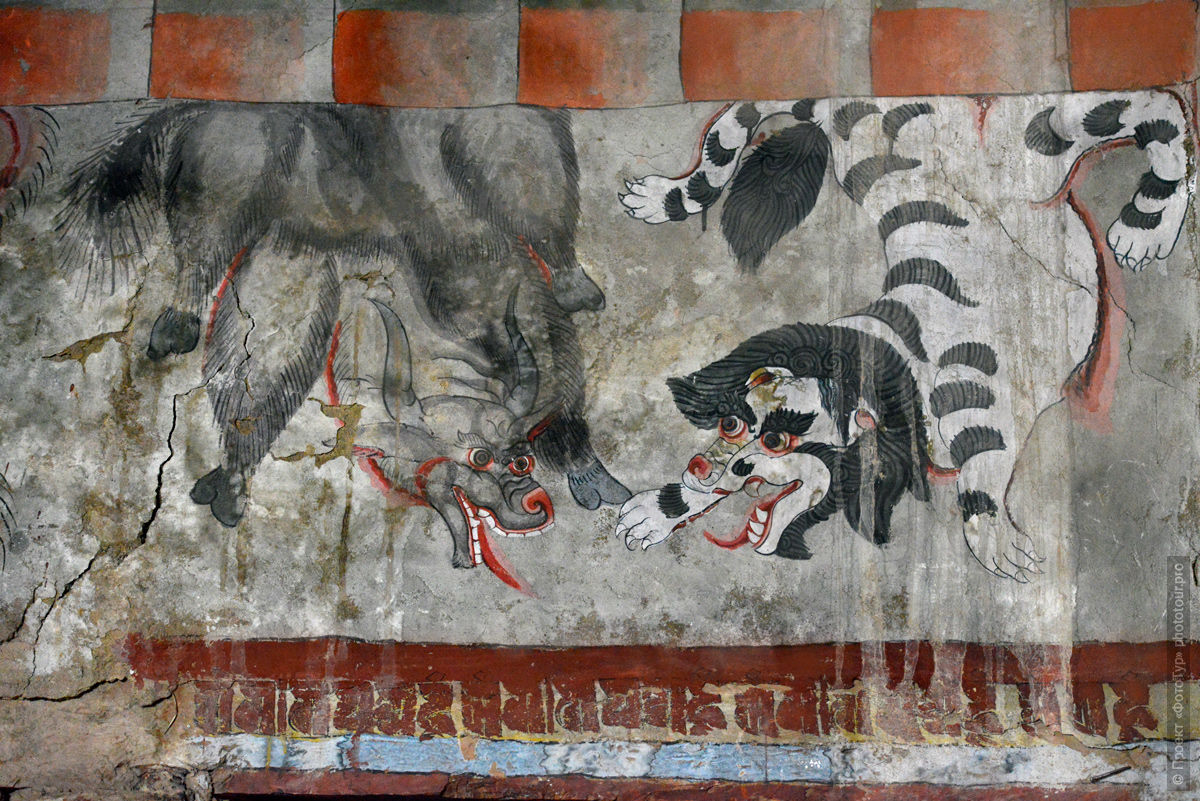
In gonpa - thangkas, whose age is up to 1000 years, a magnificent library.
Perhaps we are lucky and we get to the second puja (service) in the Temple of the Dharma Protectors of the monastery.
Also on the territory of the monastery there is a department of the clinic of Tibetan Astrology and Medicine - Men-ze-Khang, if you wish, you can undergo pulse diagnostics (free of charge) and buy natural preparations recommended by your doctor.
Return to Leh, fees.
Hotel in Leh.
Day 11, July 8: Leh - Delhi (flight).
Morning transfer to the airport for the flight from Leh to Delhi.
And a final glimpse of the Ladakh mountain ranges.
Depending on your flight home, you can spend the rest of your time in Delhi either at New Delhi International Airport or book a Delhi tour with a Russian-speaking guide.
Evening departure from Delhi International Airport to your home country.